
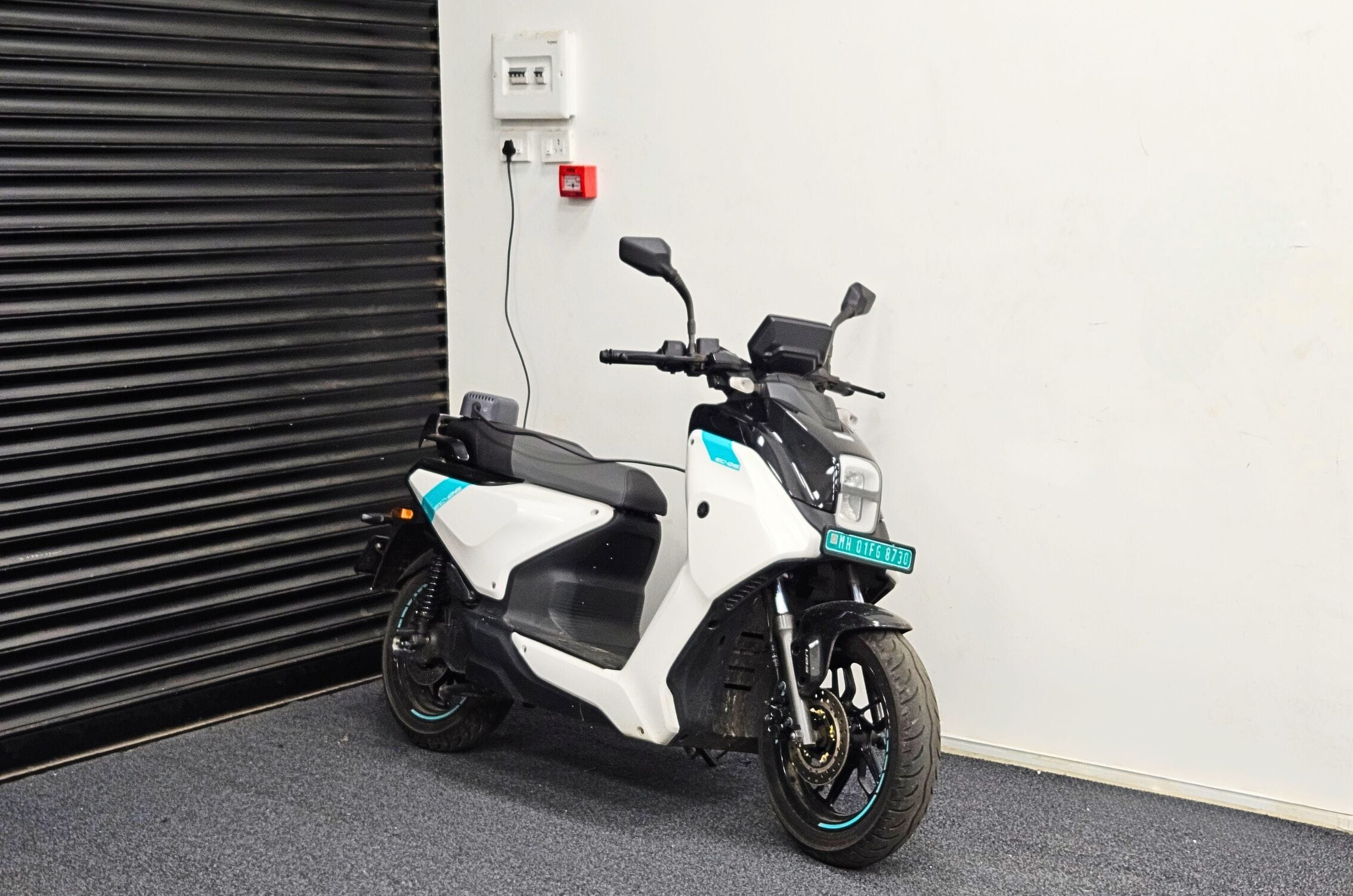
Yamaha recently entered the electric scooter market with its EC-06, which is a redesigned River Indie but retains all the core mechanicals. At Rs 1.71 lakh (ex-showroom, Bengaluru), the EC-06 is also one of the more expensive options in the electric scooter market. We were able to subject the EC-06 to our real-world range tests and this is how Yamaha’s debut EV performed.
- In ‘Normal’ mode, it covered 114km
- It has an efficiency of 28.5km/kWh
- Small 450W charger takes 10hr to top up a flat battery to full
Yamaha EC-06 real world range
When subjecting the EC-06 to our range tests, we used the middle ‘Standard’ riding mode, where the range indicator on the display showed us 93km with a fully charged battery. Its 4kWh battery sends power to a mid-mounted motor capable of 6.7kW peak output - same as the River Indie it is based on. In its Standard riding mode, you can achieve the 79kph top speed but power delivery is gentler than on the top ‘Power’ mode and the regenerative braking too is in its middle setting.
At 132kg, the EC-06 is one of the heaviest electric scooters in India and is just 3 kilos lighter than the Indie it is based on. It also uses larger 14-inch wheels shod with chunky tyres and both this as well as its weight do play a role in the range it can travel on a single charge.
In city traffic conditions, at lower speeds and with regenerative braking kicking in more often, the EC-06’s range was dropping at a slower rate than when we were at faster speeds on open roads - this will be the case for all EVs and isn’t a trait exclusive to it. For every 10 percent SOC drop, the EC-06 covered an average of 11.4km and at the end of the test, the scooter covered 114km.
This was actually much higher than what the range indicator on the display showed (93km) and ultimately the range you get will vary on a multitude of factors like your riding style, tyre pressures, prevailing traffic and weather conditions among others.
Its performance remained consistently reliable and even below 20 percent SOC, it was able to comfortably climb flyovers and pass moving traffic effortlessly. Under 10 percent SOC was the first time we experienced a noticeable performance drop and even then, the scooter could reach a speedo-indicated 50-55kph and acceleration too was not impacted severely.
Once the battery fell below 5 percent SOC, the scooter defaulted to ‘Eco’ mode and both acceleration and top speed were quite mellow but even so, it wasn’t painfully slow and we saw 40-45kph on the display. At 0 percent SOC, when the scooter finally ran out of juice, it stopped moving despite twisting the accelerator but the display and all the other functions of the vehicle like the seat and charger release flaps were functional.
With this range number we received, the EC-06’s efficiency works out to 28.5km/kWh. While the EC-06’s range is undoubtedly quite impressive, one point to bear in mind is that you need to plan your charging cycle properly because the Yamaha only comes with a 450W charger, which takes a glacial 10 hours (claimed) to top up a flat battery to full.
Autocar India’s range testing
Before our real-world range test, the battery of our two-wheeler on test is fully charged, and we maintain tyre pressures as recommended by the manufacturer. The two-wheeler is then driven in a fixed loop in the city and highway (for electric bikes that are capable of doing so), and we maintain certain average speeds while following the speed limit. While doing so, we also ensure periodic rider swaps to ensure consistency and subject the vehicle to varying riding styles. The vehicle is run until its battery is completely drained and it shuts down or does not go ahead even if the screen is on.


