
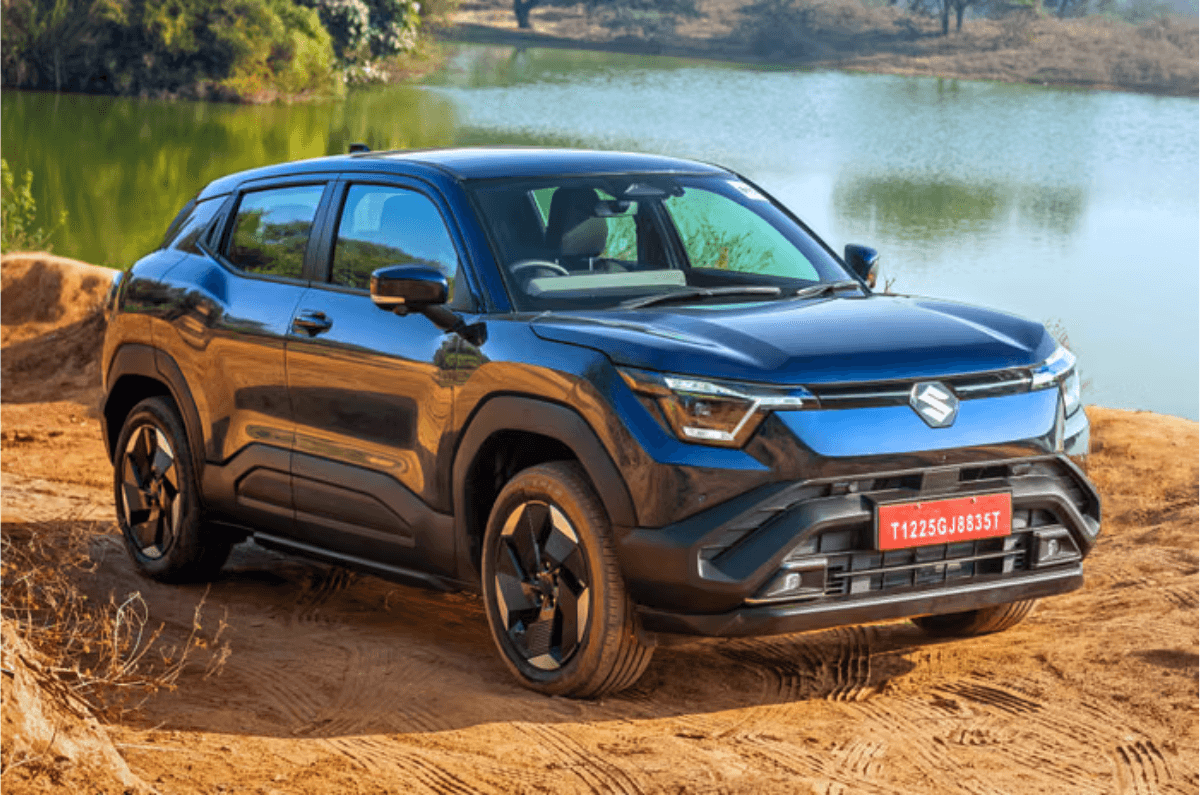
We have finally sampled the Maruti e Vitara on Indian roads, but before we proceed further, here are a few key things to keep in mind. Maruti Suzuki hasn’t shared any technical details, specifications, or a features list yet, so much of our review is based on what we could gather from our drive of the e Vitara in the UK, along with some assumptions.
It should also be noted that the e Vitara price list will only be announced early next year, so how it stacks up against rivals like the Hyundai Creta Electric, Tata Curvv EV, MG Windsor, Mahindra BE 6 and Vinfast VF6 is yet to be seen. Without much further ado, here are the pros and cons of the Maruti EV.
Pros
Smooth and manageable power delivery
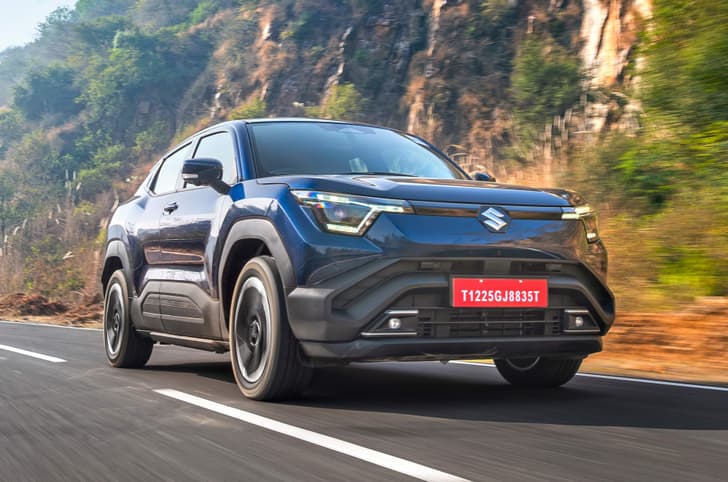
Our test car was likely the e Vitara Delta variant, which pairs a 174hp front-wheel-drive motor with a 61kWh battery. Off the line, the e Vitara doesn’t deliver the kind of neck-snapping shove typical of EVs. Instead, acceleration is smooth and linear. The conservative tuning could be to maximise range efficiency, which is often associated with Maruti cars. Even so, performance doesn’t feel lacking. We clocked 0-100kph in 9.25 seconds, which is respectable and in line with the Tata Curvv EV.
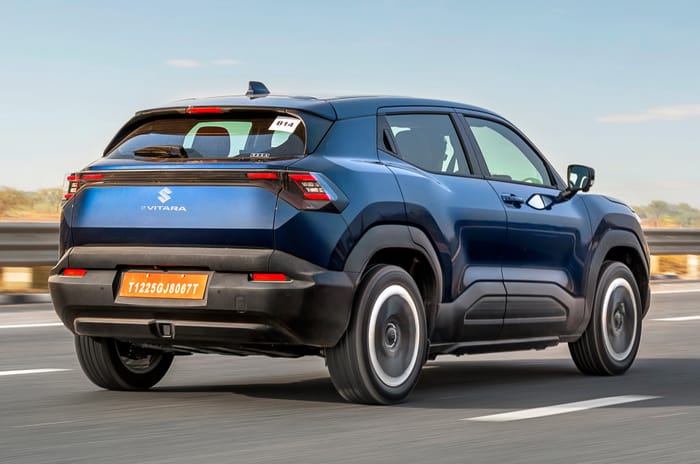
The absence of sudden surges in acceleration and the linear way speed builds up make the e Vitara an easy vehicle to drive, especially in the city. On the highway, too, it cruises comfortably at three-digit speeds. Drive modes include Eco, Normal and Sport, though the corresponding effect on the powertrain’s response isn’t dramatic. While we’re yet to put the EV through our in-depth real-world range tests, Maruti claims an ARAI-rated range of 543km for the 61kWh battery (FWD version only; AWD unlikely for India).
Light steering aids low-speed manoeuvrability
The light steering makes city driving easy, especially in traffic, and it feels predictable. The squarish two-spoke unit is also comfortable to hold, and it’s good to see proper physical buttons for the ADAS functions and sound system. Tilt and telescopic adjustment also help in finding a comfortable driving position.
Good interior design and quality
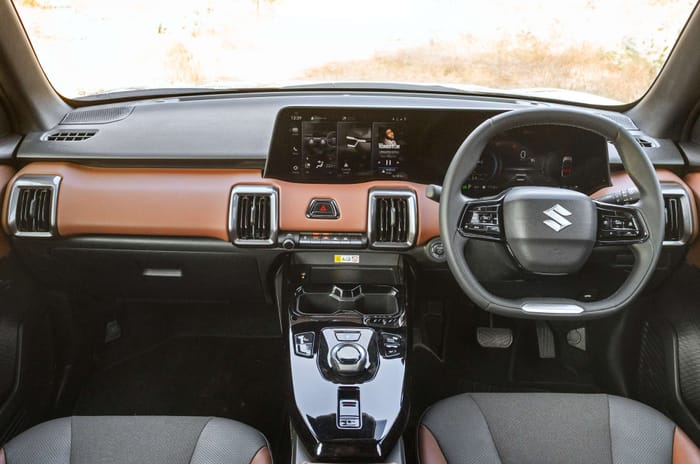
The e Vitara’s interior impresses with its design, and the quality of materials used is the best we’ve seen in a Maruti. The asymmetric dashboard has a twin-screen layout, a soft-touch brown centre trim and dark-silver AC vents. Physical controls for HVAC and other car functions mark their presence, too. The gloss-black centre console houses cup holders, a wireless charger and the drive selector. There’s plenty of storage under the floating centre console and armrest, plus door bins and a glovebox.
Cons
Limited rear seat headroom and boot space
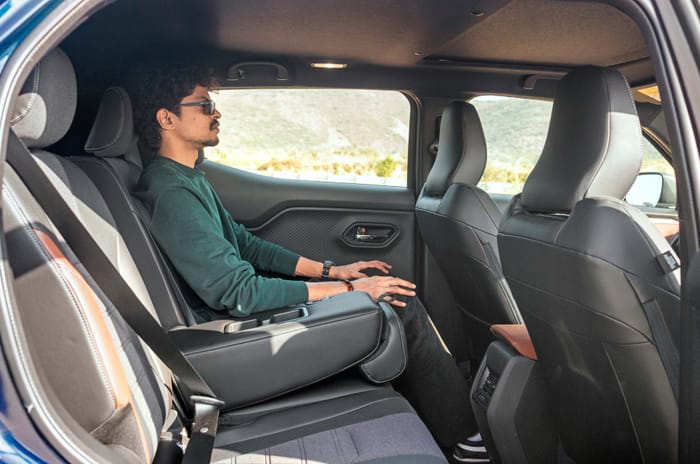
Rear-seat legroom should be sufficient for most, but headroom will be tight for anyone close to six feet or over, despite the scooped headliner and the reclining backrest. Like at the front, the rear seat also places occupants in a slightly knees-up position. The single-pane glass roof doesn’t help make the cabin feel spacious, and the dark upholstery only adds to the same. Furthermore, the side windows, though long, have a small aperture. Coming to luggage space, it’s tight. The boot is also shallow.

Feels unsettled at highway speeds
The suspension setup is on the firmer side, which becomes even more noticeable over bumps and sharp potholes. The ride feels busy and unsettled at highway speeds with noticeable side-to-side movement, especially over expansion joints. Over longer trips, this could make some passengers feel uneasy.
Evident road and wind noise
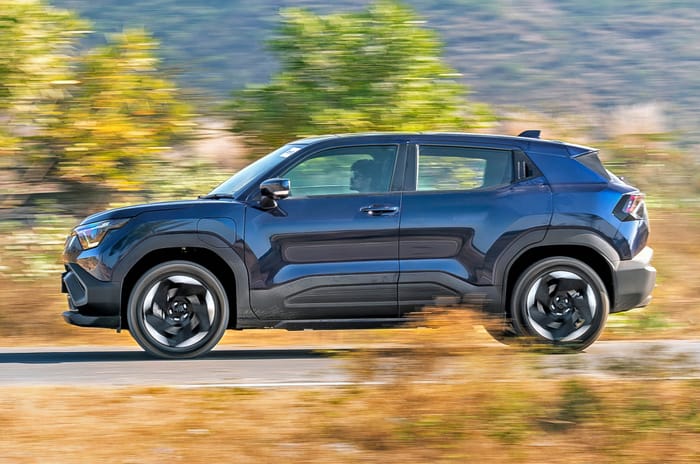
Another area that needs improvement is insulation. The noise levels at higher speeds, especially on concrete roads, become quite noticeable. Tyre noise, in particular, filters into the cabin and gets annoying quite quickly.

