
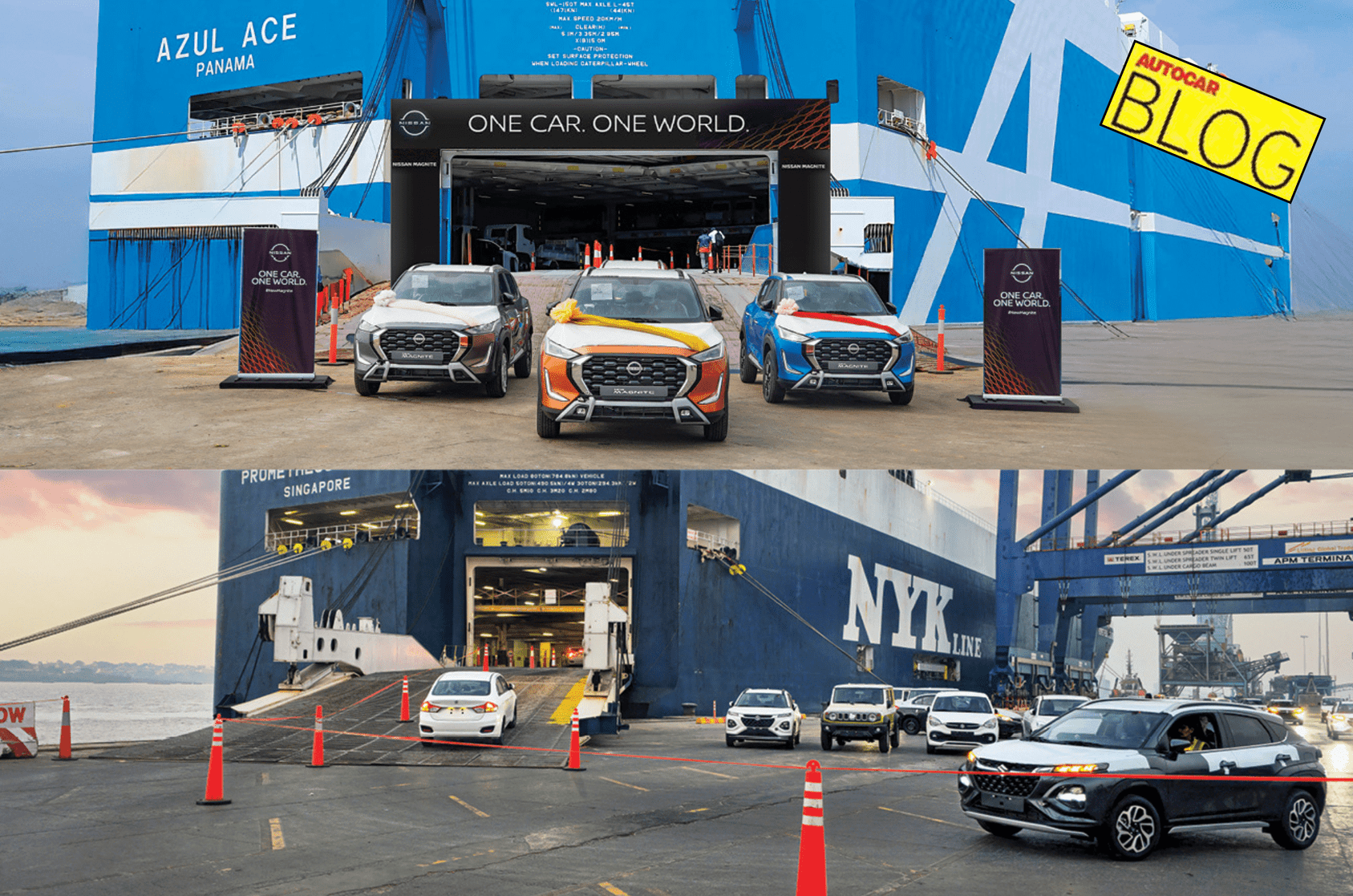
2025 has been a very good year for Indian automobile exports. Every Indian brand has outdone itself over the previous year. The standout performance has been in South Africa, where, according to a report by the market intelligence firm Lightstone, nearly half of all four-wheelers sold were connected with India. They were either Indian brands like Mahindra or Tata, or were cars from the Maruti Suzuki stable rebadged as Toyotas. The Celerio is the Vitz, the Baleno is the Starlet and the Fronx is the Starlet Cross.
Exporting your product across the world always gives a brand a high. Not only are you carrying your own brand, but also that of the country of provenance, in our case, India. Brand India wins as much as brand Mahindra, brand Tata, brand Bajaj, and so on.
But is just exporting sustainable enough? In our case, in most instances, we export riding on the manufacturing cost advantage. The Lightstone report states, “The growth in vehicle sales originating in India can be attributed to the large number of manufacturers producing vehicles there, supported by relatively lower labour and manufacturing costs.” Just 15 years ago, roughly 50 percent of all light vehicles sold in SA were manufactured there, while Indian imports accounted for only 5 percent.
Does exporting to multiple markets make a brand truly global? I do not believe so. A truly global brand is one that operates manufacturing setups in multiple markets. One has to invest in the market in the form of a plant, an assembly operation, the supply chain, the workforce and the entire ecosystem to be recognised and respected as a global brand.
You need to be designed, made and marketed in a market outside of your home market to be the sustainable flag bearer of your country of provenance. You bring in your unique cultural and managerial ethos into that market. You bring in principles and techniques and weave those into the local cultural fabric to be recognised as one of their own, while fully preserving the identity of the country of origin.
Toyota does not end up being any less Japanese by designing and making vehicles in France, the US, or Thailand. Neither should any Indian brand. We should evolve beyond just exporting and begin designing and making / assembling vehicles in all large markets if we are to be accepted as one of and amongst them. Also, the entire Indian diplomatic community in SA should be driving a Mahindra, Tata, Maruti Suzuki, Royal Enfield, TVS and Hero as brand ambassadors of their country. That is when we create truly global Indian brands that make Brand India proud.


