

The Range Rover sub-brand aside, Land Rover’s own SUV-heavy lineup has its Defender occupying the uppermost echelon. Making its debut around six years ago, the current-gen Land Rover Defender rivals the likes of the Mercedes-Benz G-Class, Mercedes-Benz GLS, Lexus LX, Toyota Land Cruiser, BMW X7 and Jeep Wrangler. Should you be on the fence for a Land Rover Defender, here are some valid points that will help clear your doubts – compiled based on our expert reviews of this luxury 4x4. Let’s start with the positives first.
Toughness meets comfort
Few SUVs match the Defender’s impressive driving dynamics, either off- or on-road.
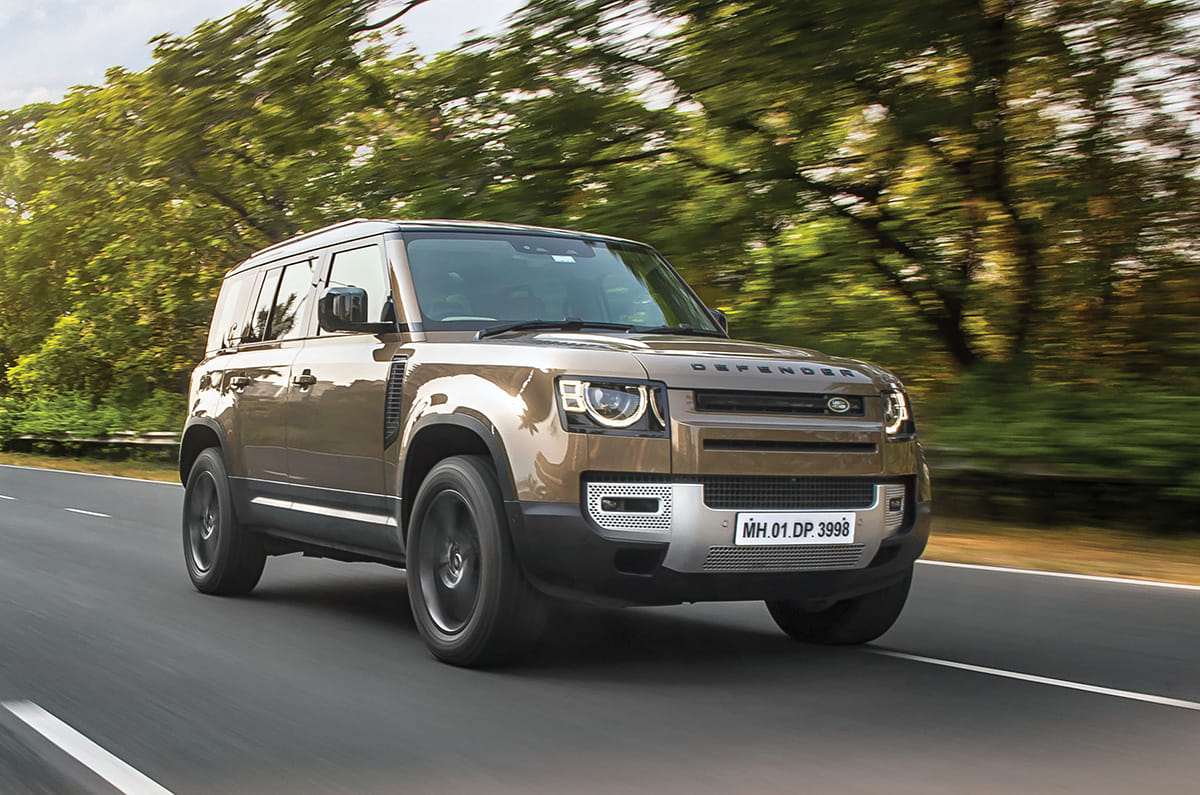
Enabling the Land Rover Defender to conquer rugged terrain as well as smooth tarmac are a few key features. The height-adjustable air suspension, two lockable differentials, a low-range gearbox and Land Rover’s Terrain Response System help the Defender clear most obstacle without much fuss. Meanwhile, a modern monocoque construction, precise steering and straight-line stability – all cumulatively contribute to the Defender’s comfortable ride and surprisingly good on-road agility. Further adding to the Defender’s driving experience is its high seating position and excellent all-round visibility.
Multiple engine & body types
There is a Defender to suit almost any customer profile.

Land Rover offers the Defender in 90, 110 and 130 body styles – the seating configuration ranging between five to eight occupants (in the 130). Depending on the body type, the Defender is available with turbo-petrol six-cylinder, supercharged eight-cylinder and turbo-diesel six-cylinder engines, all of which are mated to a smooth and well-calibrated ZF 8-speed torque-converter automatic gearbox. Of course, all variants of the Defender remain resolutely four-wheel drive (4WD).
Tech-laden cabin
A long list of gizmos should keep tech-savvy buyers entertained.
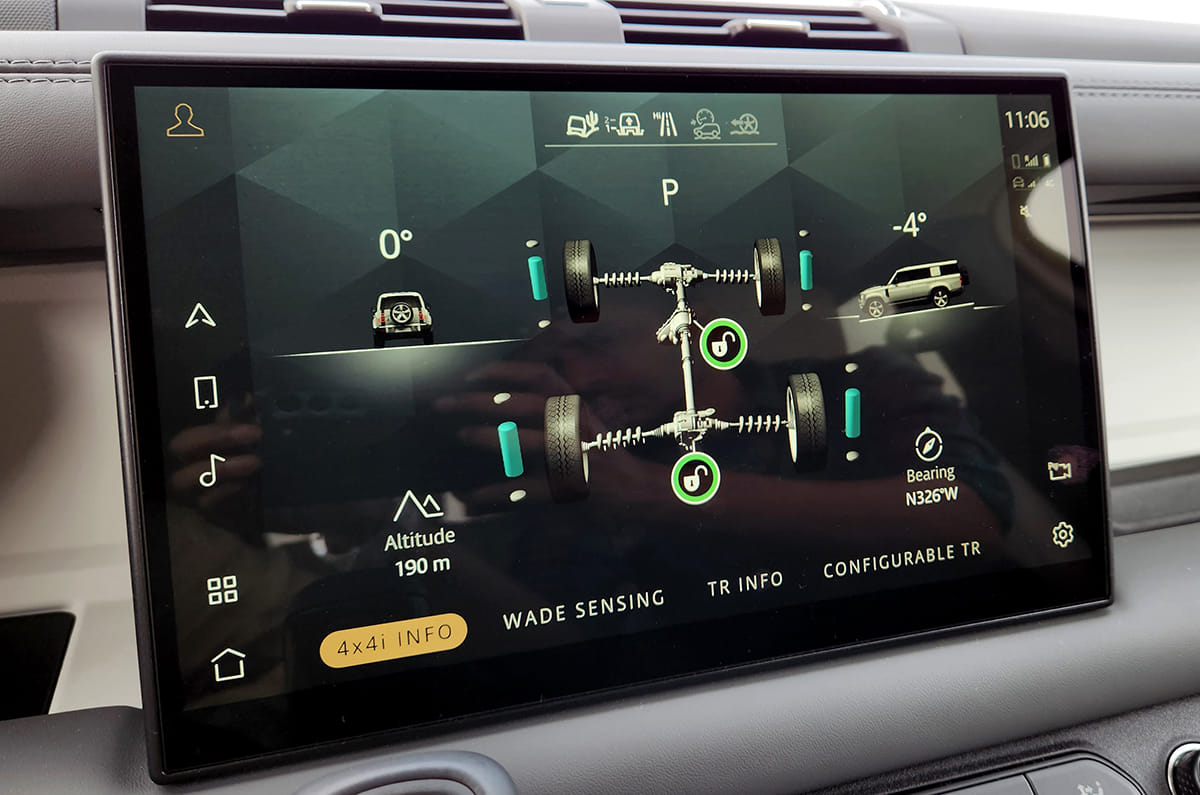
The Land Rover Defender comes with the usual ‘luxury car’ features such as multi-zone climate control, multi-way adjustable front seats with heating & cooling, surround-view cameras, ambient lighting, wireless charging, a digital instrument cluster, and Apple CarPlay & Android Auto. That is not all. The Defender gets Land Rover’s Pivi Pro infotainment system with dedicated off-road menus and connected-car features. The equipment list further includes a digital inner rearview mirror (IRVM), dual sunroofs, a high-end Meridian audio system, plus a head-up display.
Lacks outright plushness
The interior of the Defender does not feel as upscale as some of its rivals.
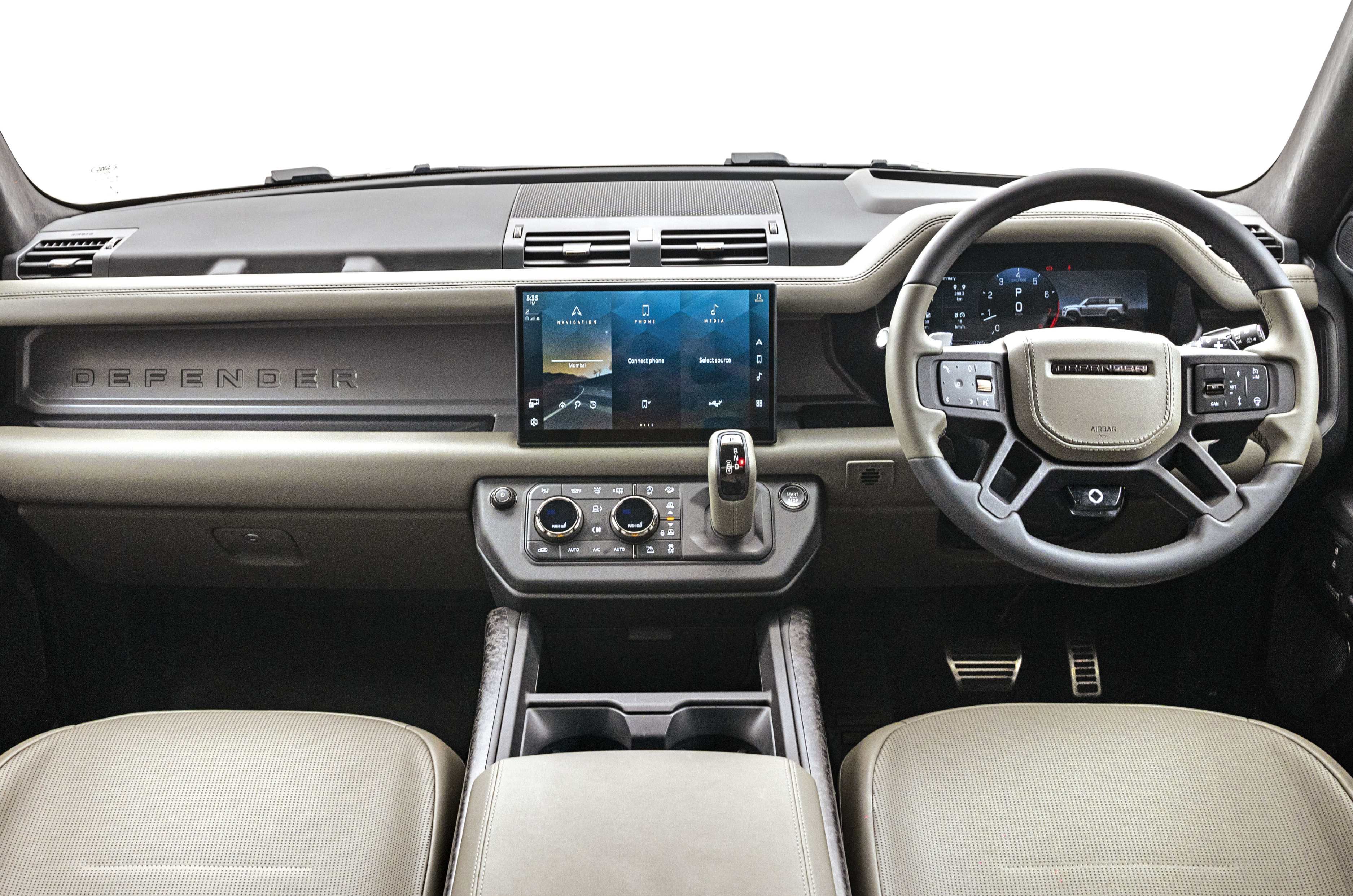
When compared to some of its German and Japanese rivals, the interior of the Land Rover Defender lacks the plushness one usually associates with such expensive SUVs. The dashboard and centre console areas feature rugged-looking trim that suits the ‘Defender’ title, but these do not convey the sense of outright luxury. Similarly, the 8-seater Defender 130’s last row feels relatively mundane and lacks the level of comfort that the second row offers.
Ingress & egress challenges
That high ground clearance comes at a cost.

While Land Rover has equipped the height-adjustable air suspension of the Defender with a special ‘Access Mode’, getting in and out of this luxury 4x4 requires considerable effort. This means that in any other mode where the Defender sits higher off the ground, ingress or egress would become even more challenging.
Uncompetitively expensive
Rivals exude their high asking price with more conviction.

Compared to the BMW X7 or the Mercedes-Benz GLS, the Land Rover Defender does not feel as upmarket on the inside as its price tag would have you believe. The interior edges closer to ruggedness than overt luxuriousness in its overall design and feel, further dulling its perceived levels of plushness. Finally, there is a long catalogue of optional extras, which will quickly balloon the price beyond what one thought was already quite high. As it is, the Defender sold in India comes as a completely built unit, thereby attracting massive import duties to begin with.
Also read
3 reasons to buy the Hyundai Exter and 2 to skip it
What to Expect from the upcoming Mercedes-Benz V-Class
Kia Seltos Petrol Automatic real-world fuel economy tested, explained


