
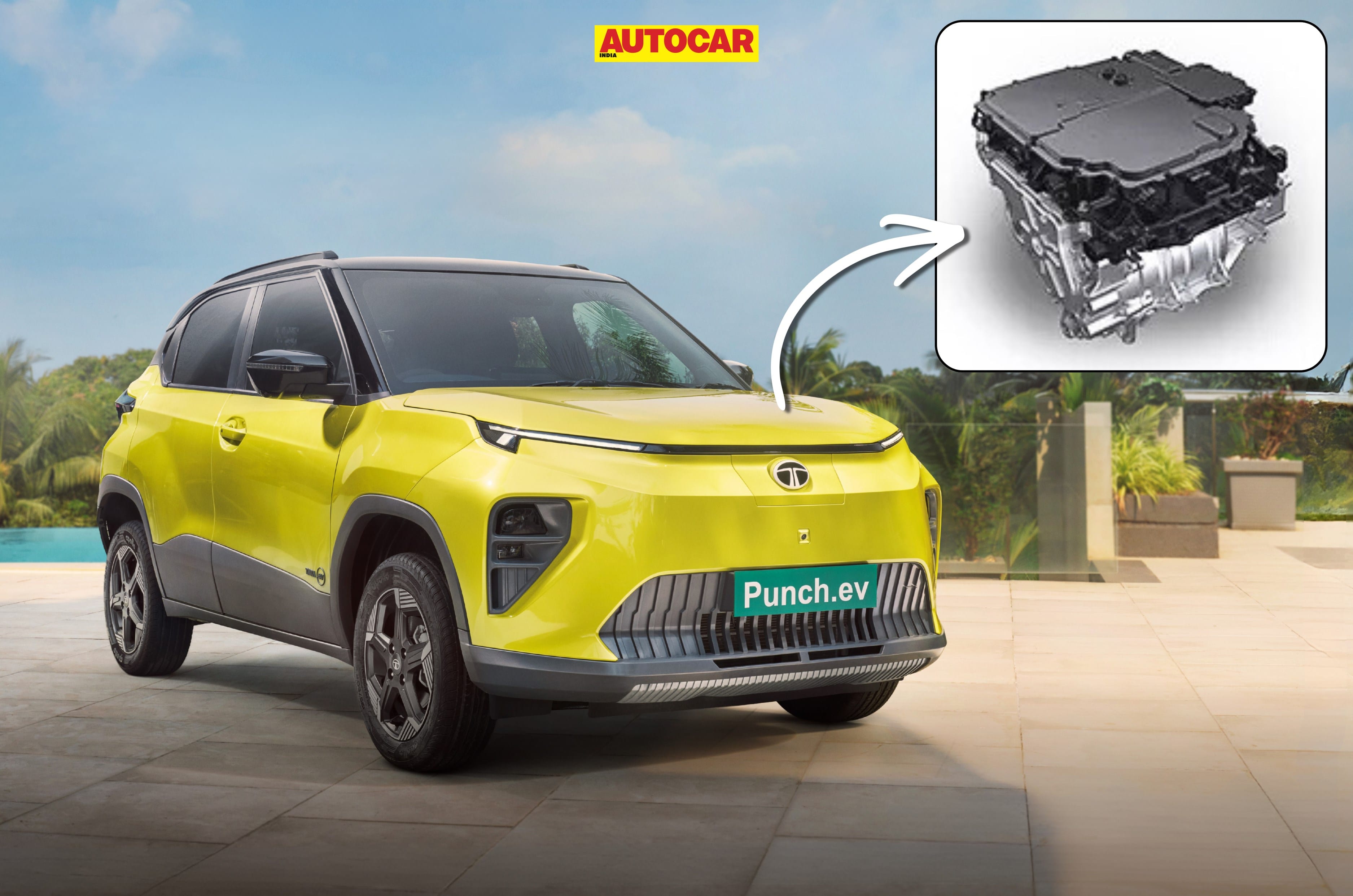
With the launch of the updated Punch EV, Tata Motors has also debuted a new 6-in-1 drivetrain setup, which it says is the first application of its kind in the country, and, a major factor behind the lower than before retail price of the electric Punch. “The battery non-cell costs have come down but the 6-in-1 combo drivetrain is certainly cost effective” says Anand Kulkarni, Tata Motors’ Vice President Passenger Electric Vehicles.
- New 6-in-1 drivetrain was key in bringing down Punch EV’s price
- It also helped reduce package size by 50 percent and weight by 28 percent
- Efficiency was boosted by 6 percent, while also using 40 percent less semiconductors
Tata Punch EV 6-in-1 drivetrain explained
For a while now, carmakers, including Tata Motors have been using 3-in-1 systems that combine the e-motor, reduction gear and the DC to AC invertor into one unit. However, brands have been integrating further components as part of this x-in-1 approach and doing 5, 6 and even 10-in-1 systems.
With the new Punch EV, Tata Motors has gone with a 6-in-1 unit that combines the e-motor, reduction gear, inverter and also the DC-DC converter, the PDU (power distribution unit) and the on-board charger. With this approach there’s now fewer split up sub-systems and thus fewer connections and independent controllers. Tata Motors says there’s now a 50 percent reduction in package size, a 28 percent reduction in weight, a 6 percent increase in efficiency and a 30 percent reduction in electrical harnesses and connections and a 40 percent reduction in semi-conductors.
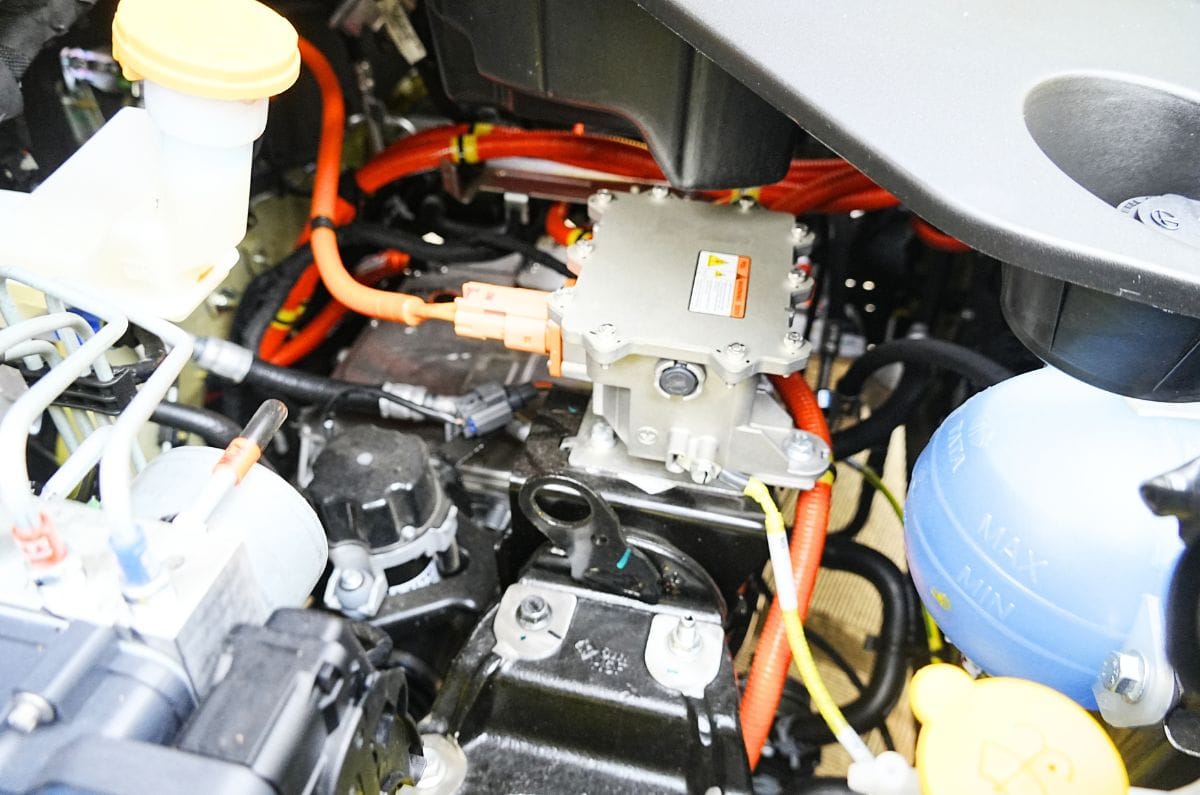
The reduction in semi-conductors and harnesses has helped with a reduction in parts and manufacturing costs and the reduction in weight aids efficiency. The package size reduction is quite easy to see in the Punch EV, one look under the hood and you see the entire 6-in-1 unit sitting low down with a hollow space above it. Oddly though, Tata Motors has not deepened the frunk to take advantage of all this space. There are a few other smaller components around, but none that look impossible to move.
X marks the spot
It’s clear then that combined x-in-1 EV drivetrains is the way forward and where Tata Motors and others, too, are headed. However, the number of integrated units will change based on the application requirements. For instance, the upcoming Sierra EV which is said to have an all-wheel-drive system would not use two 6-in-1 units on each axle. “It would be an unnecessary redundancy,” says Kulkarni with on-board chargers integrated into both drive units. “You could perhaps make do with one 6-in-1 unit and maybe a 4 or 5-in-1 unit at the front,” he explained.
There are of course some potential drawbacks with x-in-1 systems, like for instance, a potentially reduced serviceability and a higher replacement cost if the entire unit needs replacement. However, Tata Motors and most of system makers all say that with the reduced components, there’s fewer things to go wrong and this also brings about a reduction in the manufacturing complexity and so reliability goes up. Combining systems also brings about reliability because you now have one component maker, instead of multiple vendors. “It’s a very robust ecosystem where the integration is so strong, like the hand-shake between components (the way systems communicate to another) too gets simpler and more reliable” says Kulkarni.
Would Tata Motors go beyond a 6-in-1 integration? Kulkarni says, “We could look at integrating the electrical compressor, because this is also running on the high voltage,” indicating that the brand could go for higher module integration. The combined drivetrain then could expand to take on associated ancillaries too.


