
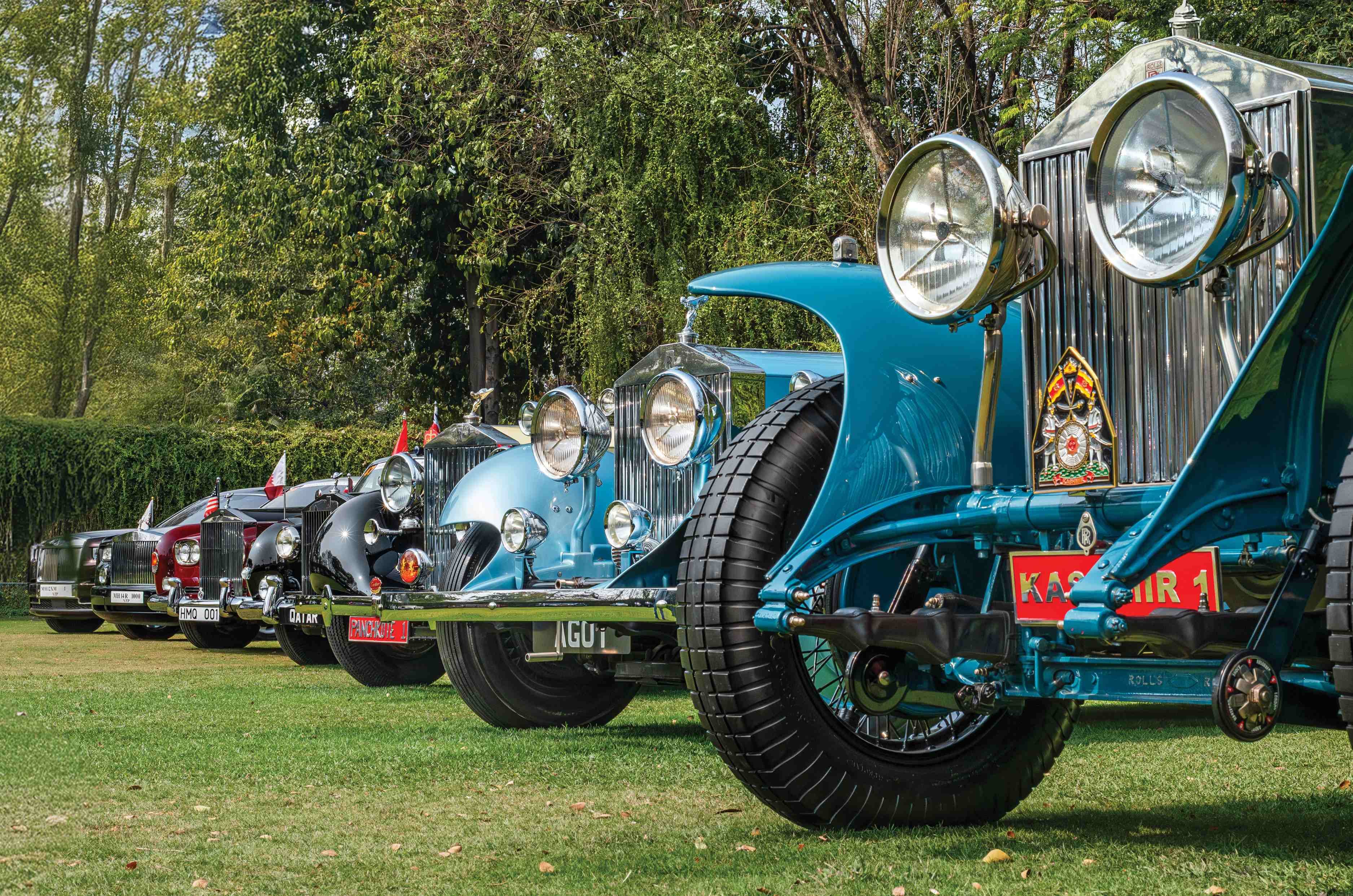
Great engineers make great cars. This is especially true when perfection is the stated goal. Take, for example, Sir Henry Royce’s often-quoted maxim; “take the best that exists and make it better. When it doesn’t exist, design it.” And that is exactly what we are celebrating today: the pursuit of automotive perfection – the legacy of the 100-year-old Phantom nameplate that incredibly can still lay the claim to being the ‘best car in the world.’ And how better to do this than spend quality time with Yohan Poonawalla’s incredible seven-Phantom line-up.
The Centurion
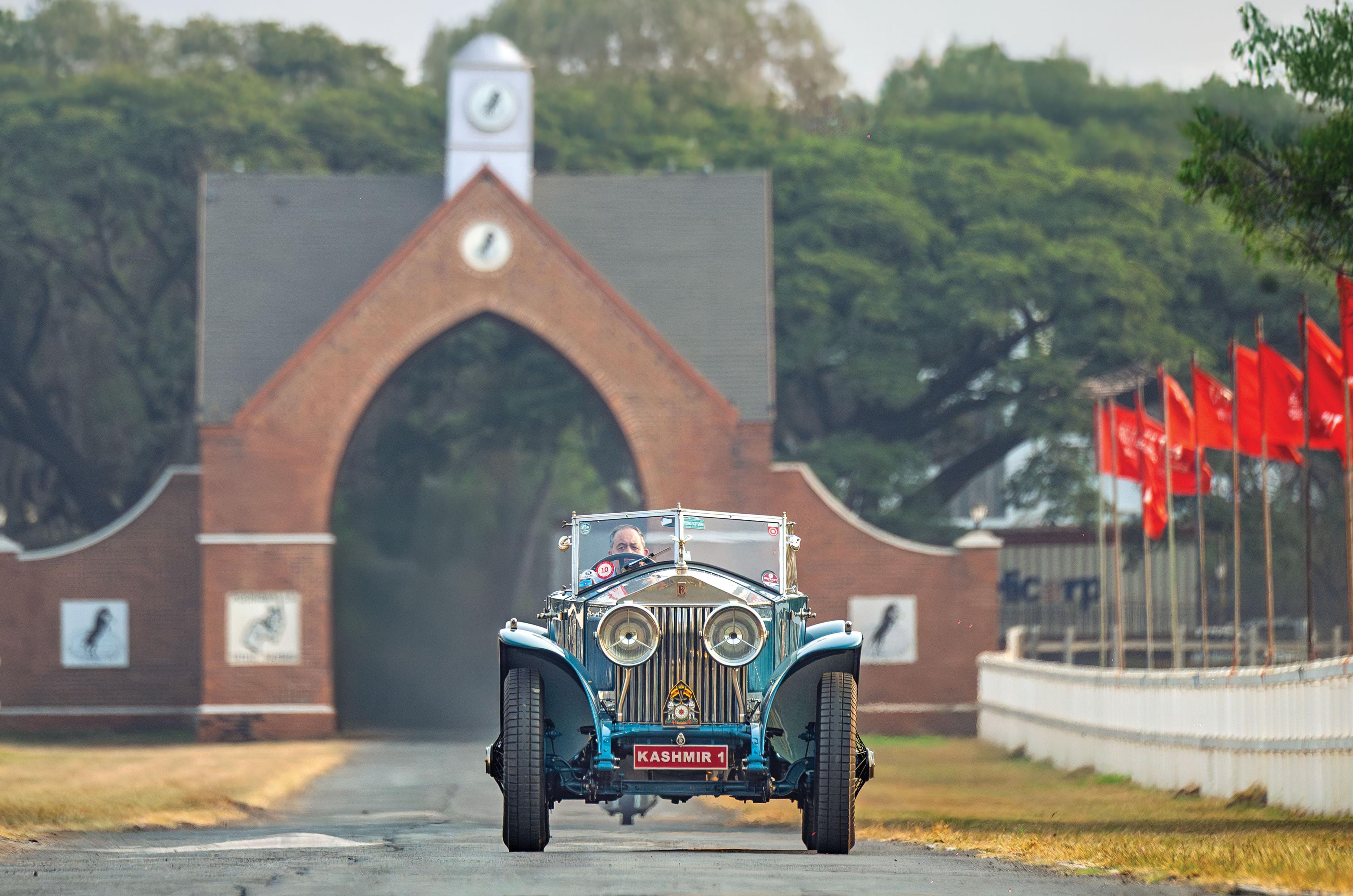
Evolved from what was already the ‘best car in the world’ – the Silver Ghost (crowned by Autocar in 1907), the Phantom I took the game forward considerably. The one here is the 17EX, a Phantom prototype built with an express purpose to push the boundaries of speed and cross 100mph (160.9kph).
While doing the ‘ton’ may sound ho-hum today, this clearly wasn’t the case a century ago. Turn back the clock, teleport yourself to 1925, and one thing’s for sure, you’ll barely recognise the world around you. Europe was just emerging from the ravages of World War I, there were only few rudimentary motor cars chugging along, and commercial aviation hadn’t kicked off yet. Not just that, the world’s fastest car at the time, the “Blue Bird”, had only recently crossed 150.76mph (242.6kph) at Pendine Sands in Wales, with Sir Malcolm Campbell behind the wheel of the car purpose-built to set the land speed record. And Royce, incredibly, wanted the Phantom to do 100mph while being silent and smooth.
This is why 17EX is nothing less than a living, breathing piece of automotive history. With its unique, streamlined body from Jarvis of Wimbledon, today, it proudly sits in Poonawalla’s garage after a life that includes ownership by the Maharaja of Kashmir, another big patron of the brand.
Two, Three, But No Four
The Phantom II similarly is an evolution of the Phantom I. Once owned by Sir Malcolm Campbell – the land and water speed record holder – and painted in Bluebird blue, the compact body was built to the specifications of an adventurer who raced at Silverstone, conquered the salt flats of Utah, and, for a time, was the fastest man both on land and water. The car even comes with a police siren, a reminder of his honorary rank.
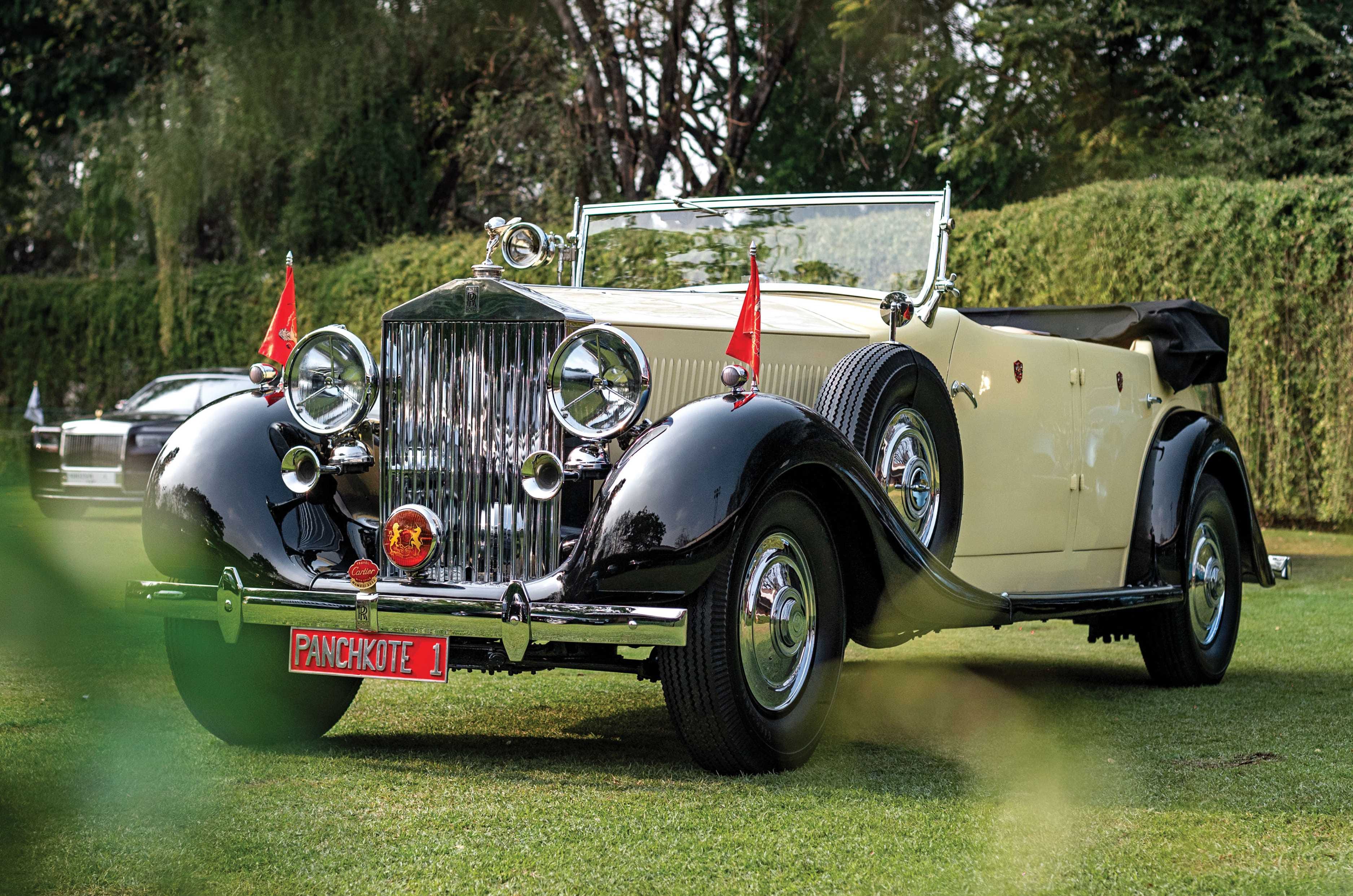
Up next is the Phantom III, originally from the princely state of Panchkote. It is Yohan’s first Rolls-Royce, one he bought with his own money. What makes the III unique is that it is powered by a V12 that uses tech from the Spitfire’s Merlin engine, also made by Rolls-Royce. All the experience gleaned made it relatively easy for Royce to work on a smaller, more compact version. The Merlin displaces 27 litres, the Phantom III, 7.3 litres.
The only Phantom not in the collection is the IV. Produced during the Second World War, only a few exist today. Plans, however, are afoot. “I am still searching for a Phantom IV,” says Yohan Poonawalla. “Only 18 exist – most in museums – but I am confident one will join the garage.”
Royals And Royalty
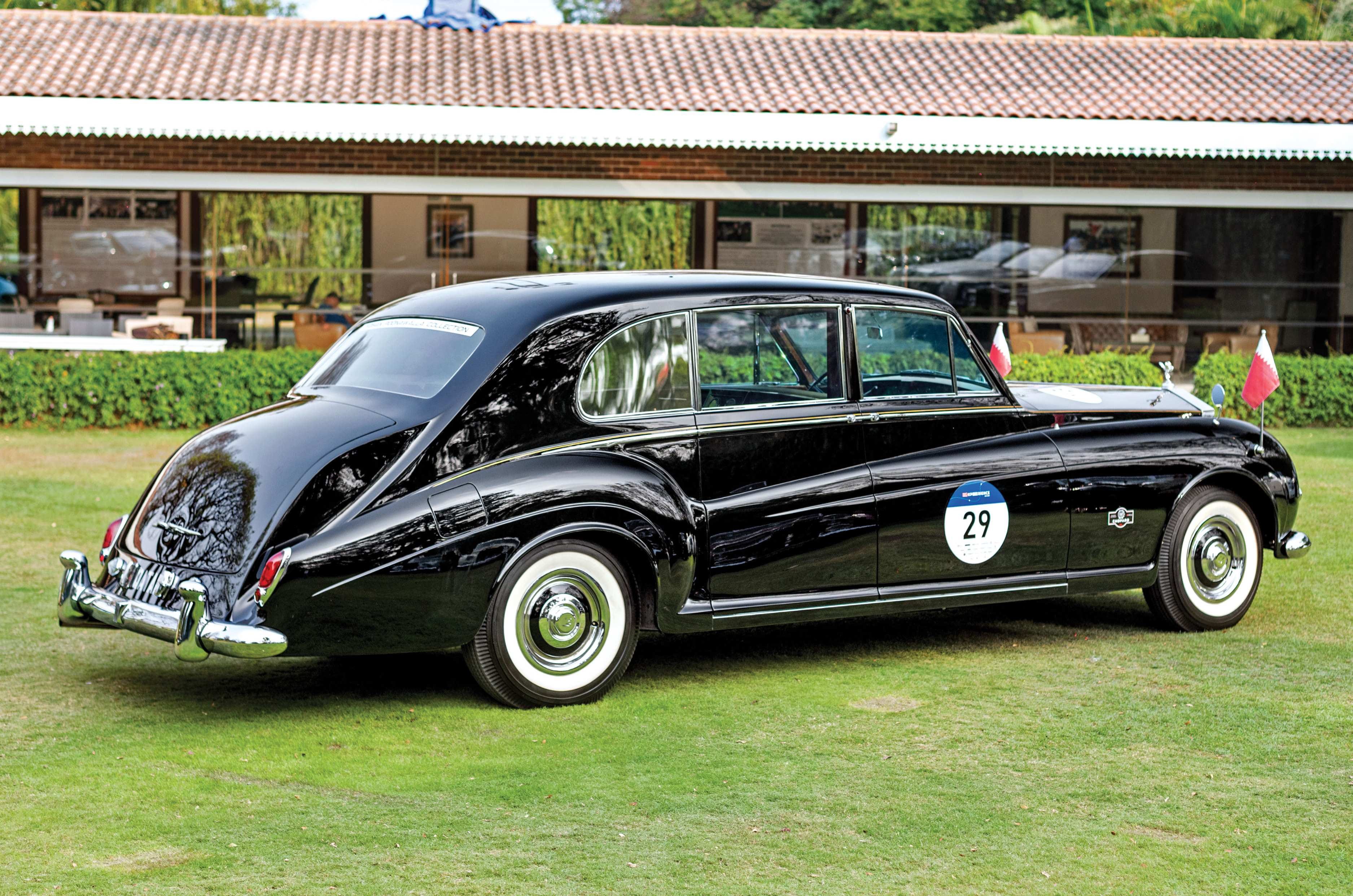
The Phantom V is the bridge between the post-war years and the opulent ceremonial grandeur of the later Phantom VI. Produced from 1959 to 1968, it uses the new 6.2-litre V8 and an automatic transmission, a significant step up. The new car is longer, larger and heavier, and the effortless torque delivery of the big V8 is much needed here.
What also adds to the evolution is that coachbuilders, such as Park Ward and James Young, shaped its long ceremonial bodies with great flair and flourish. The car quickly became the choice of monarchs, heads of state and high-profile owners. Yohan Poonawalla’s Phantom V carries provenance from the Emir of Qatar. Originally delivered after its appearance at the Geneva Motor Show, it represents the ceremonial and diplomatic role Rolls-Royce Phantom cars played during the 1960s. There’s no other car around at the time that combines engineering progress, traditional craftsmanship and a sense of occasion as the Phantom V.
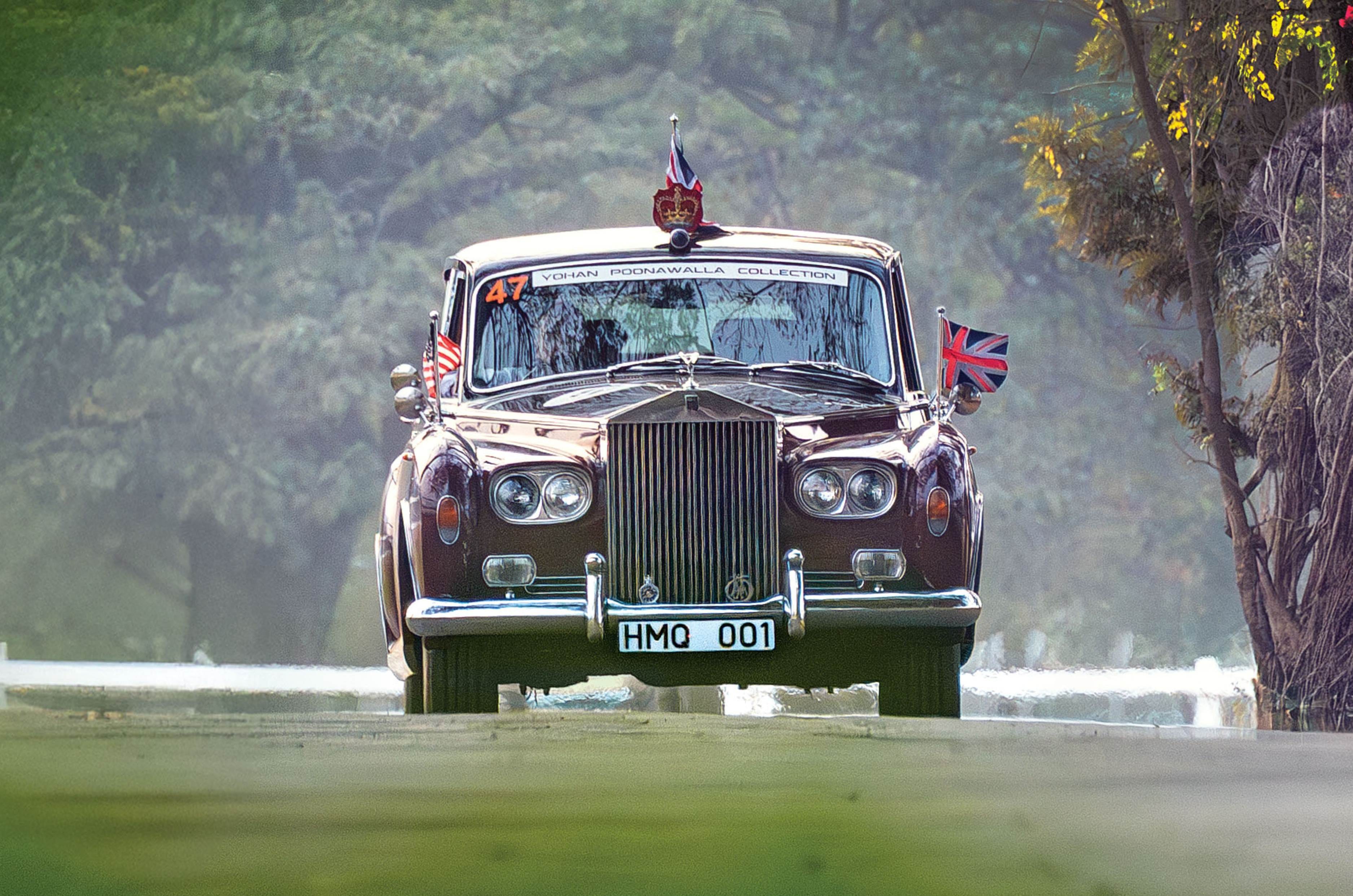
Another highlight of Yohan’s collection is the double-barrel headlight-equipped Phantom VI, a state limousine with even heavier royal provenance. Belonging to none other than Queen Elizabeth II, this is a car she used for several years. An interesting detail, the blue light on top was lit when the queen was in the car. The Queen, interestingly, had a strong connection to cars, she worked as a motor mechanic during the war and regularly drove Land Rovers well into her later years.
Modern Times
Yohan was also an early adopter of Rolls-Royce cars from the BMW era. He got himself one of the first Phantom VIIs in India. Finished in black and silver, the two tone is a celebrated car that has Poonawalla’s initials and name written across the cabin. The VII sees a return to the V12 engine, earlier only seen in the III. This one, however, used direct injection for greater power and dependability.
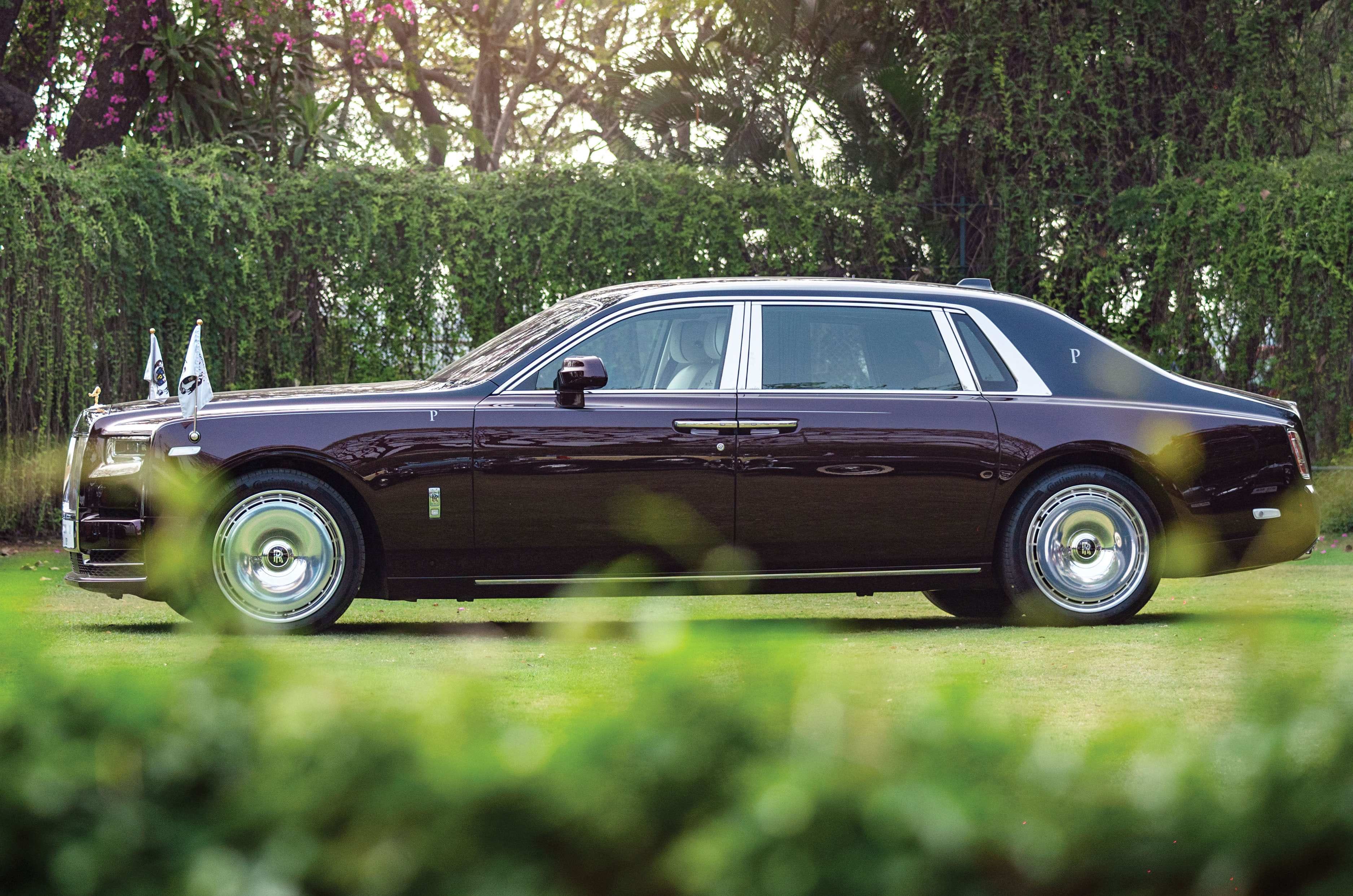
Completing the line-up is the Phantom VIII, Poonawalla’s latest acquisition. This car is the last extended-wheelbase Phantom built with the privacy suite, a feature Rolls-Royce had all but discontinued. Legend has it that Poonawalla persuaded the chairman of Rolls-Royce to allow him to commission one final example, making it a historic car in its own right. Oh, and now, the twin-turbo V12 makes 900Nm.
The Spirit Of Ecstasy
But we aren’t here only to examine the cars. Interacting with them and driving them are also part of the plan. I select the two most significant here, the first and the last before the BMW era; the 17EX and Queen Elizabeth’s Phantom VI, both bookends in a way. Both cars represent milestones: one experimental, engineered by Henry Royce himself to push the limits of performance; the other a state limousine embodying the ultimate evolution of refinement, ceremony and grandeur.
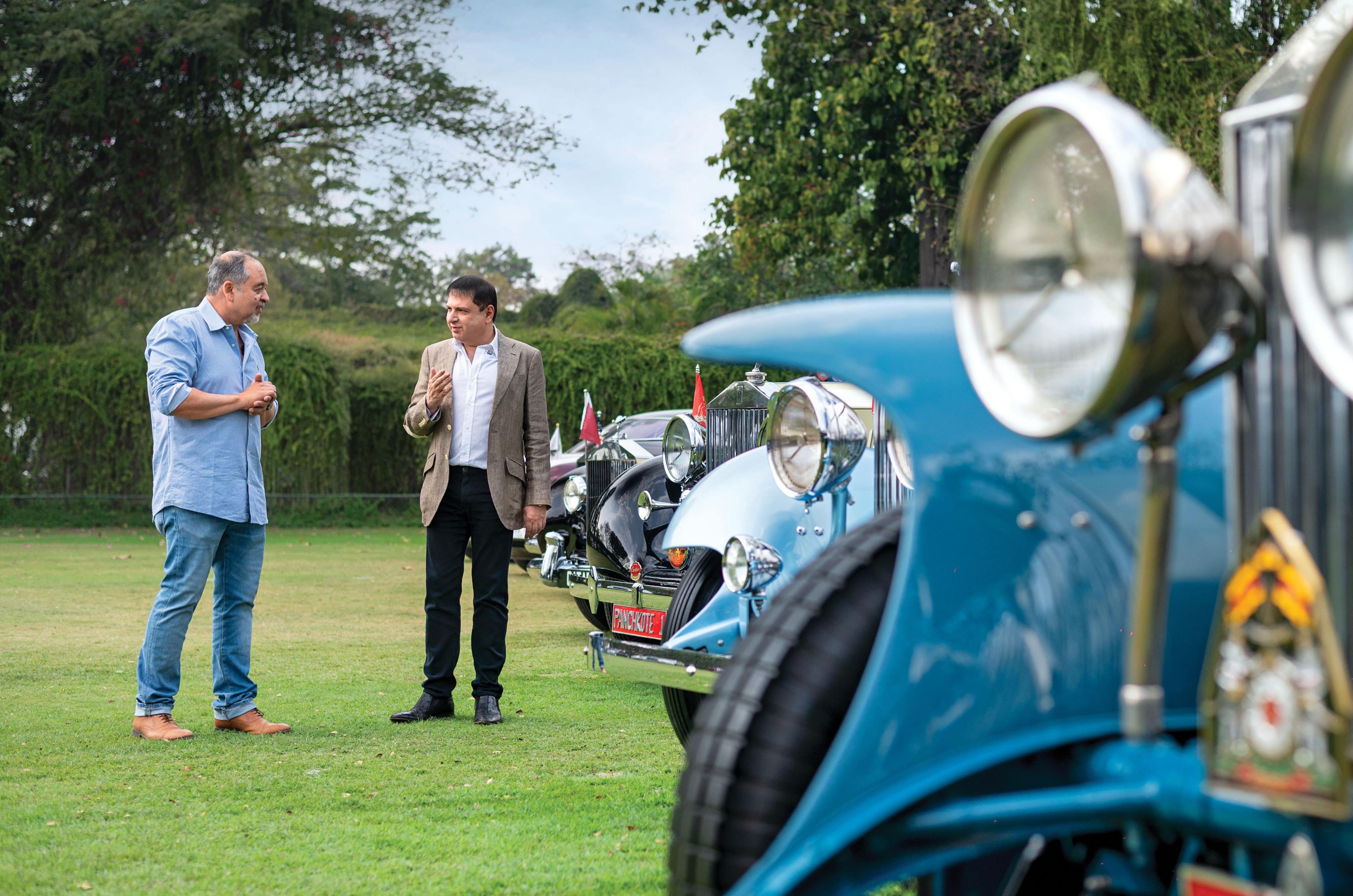
There’s little doubt that the 17EX, with its aluminium bonnet, Jarvis body and bespoke mechanicals, is a crown jewel. What you also need to remember is that it is a 100-year-old car that’s been pushed to the edges of its performance envelope, so it is heavy and difficult to drive.
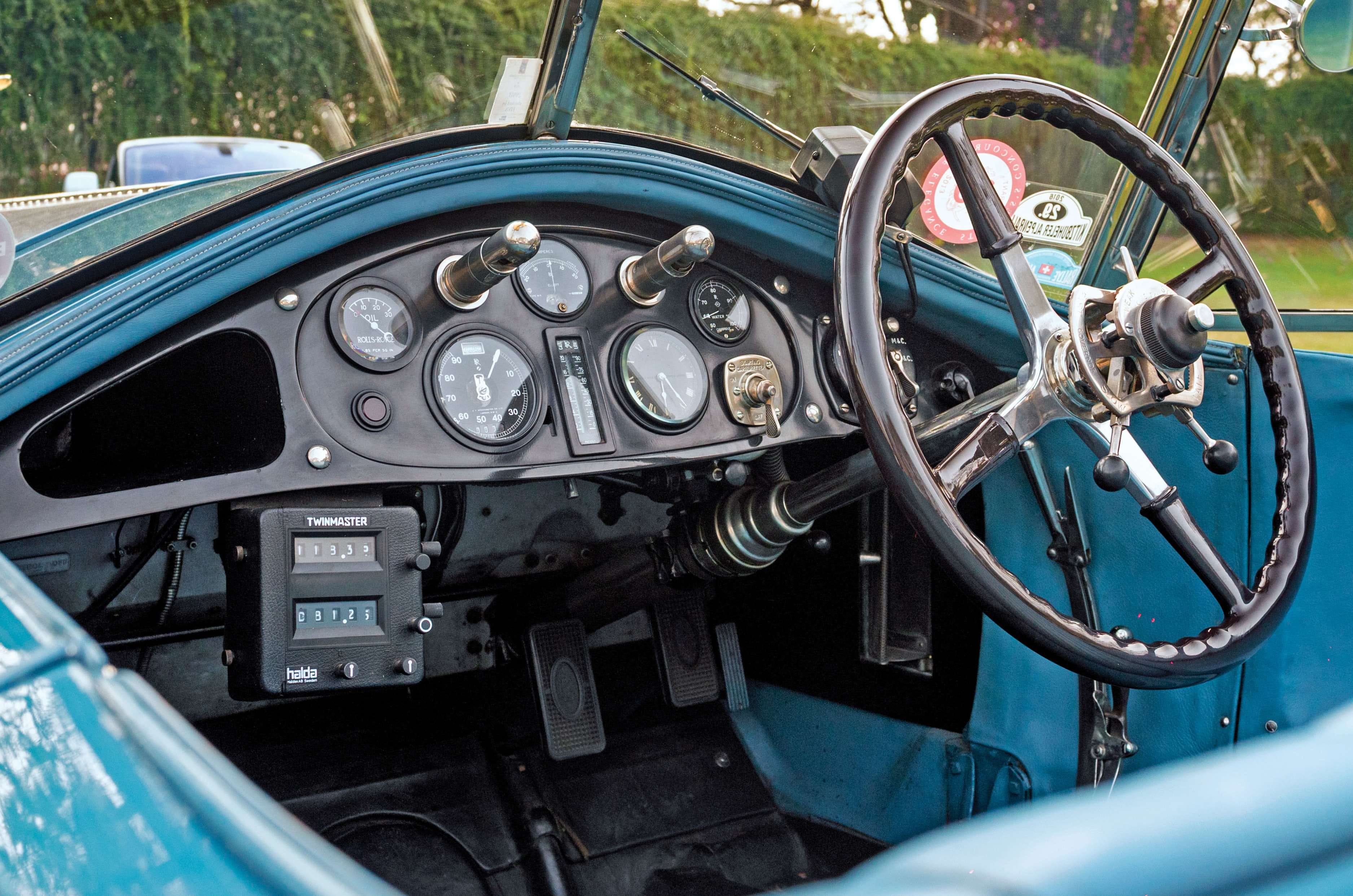
The driving position is upright, the steering wheel is large, and starting requires a careful balance of the ignition timing, fuel-air mixture (controlled from sliders on the steering wheel) and a deft tap on the foot-operated starter. Do this, and the 7.7-litre straight-six comes to life with a churning but smooth mechanical note. Hyper-refinement, even from the outset.
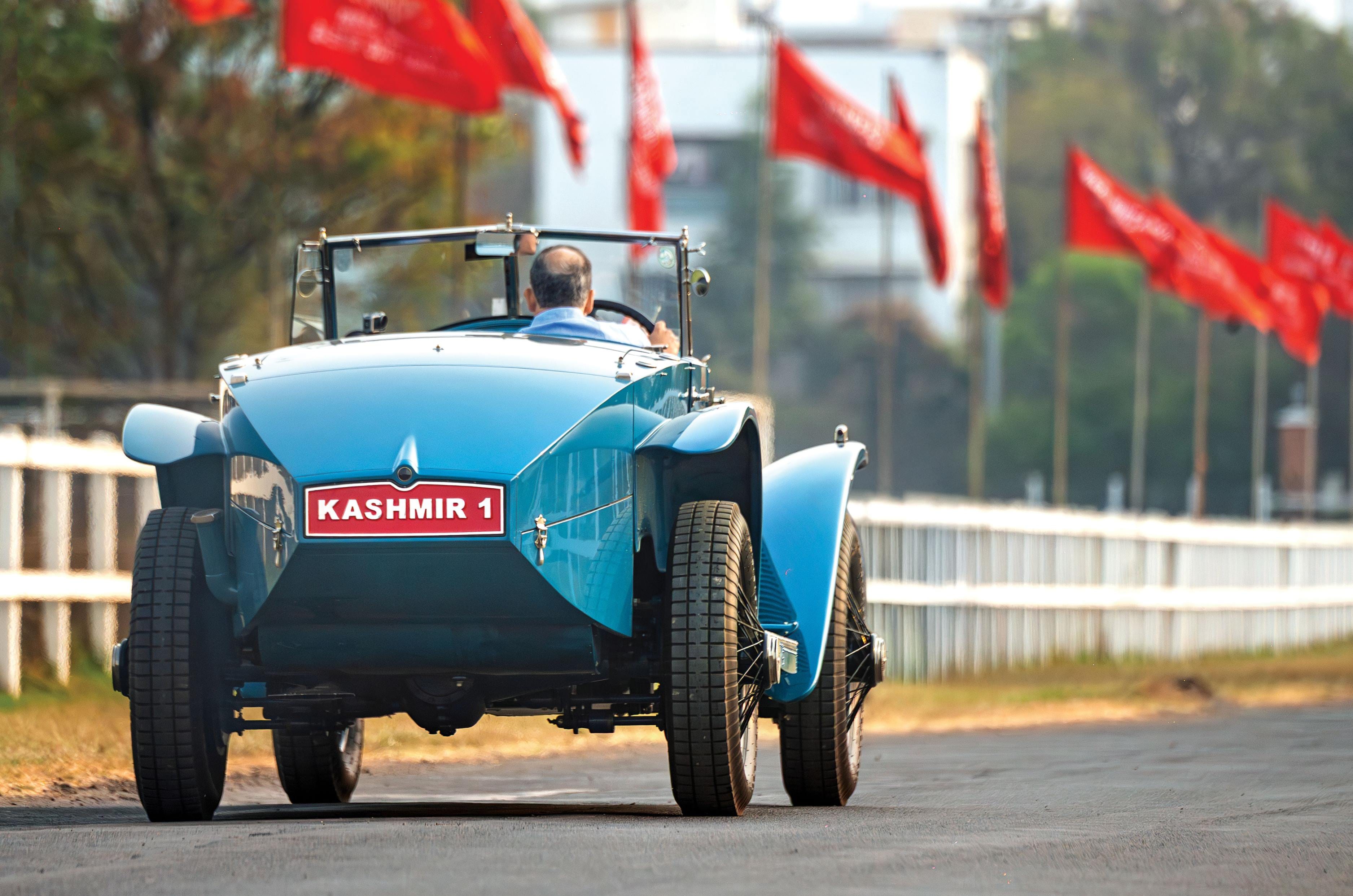
As soon as I set off, I sense the torque coursing through this engine, and even at low revs, the car pulls cleanly in second or third, a hallmark of Rolls-Royce. The gearbox, however, is unsynchronised, so double de-clutching is essential, but despite this, I don’t manage to shift cleanly every time. It’s something you need to get the knack of.
What makes it even more difficult is that the brakes feel wooden, the steering super heavy, and the cart-type suspension feels rudimentary. It’s little wonder Rolls evolved the Phantom II suspension from the cantilever to better riding semi-elliptical type.
Press down on the accelerator, however, and the car surges forward with surprising ease. At speed, the long bonnet and wraparound windscreen frame the Spirit of Ecstasy, and I really feel the potential it has to reach 100mph. While it is not comfort that defines the 17EX, the ability to sustain high speeds in an era when few cars could makes it stand apart.
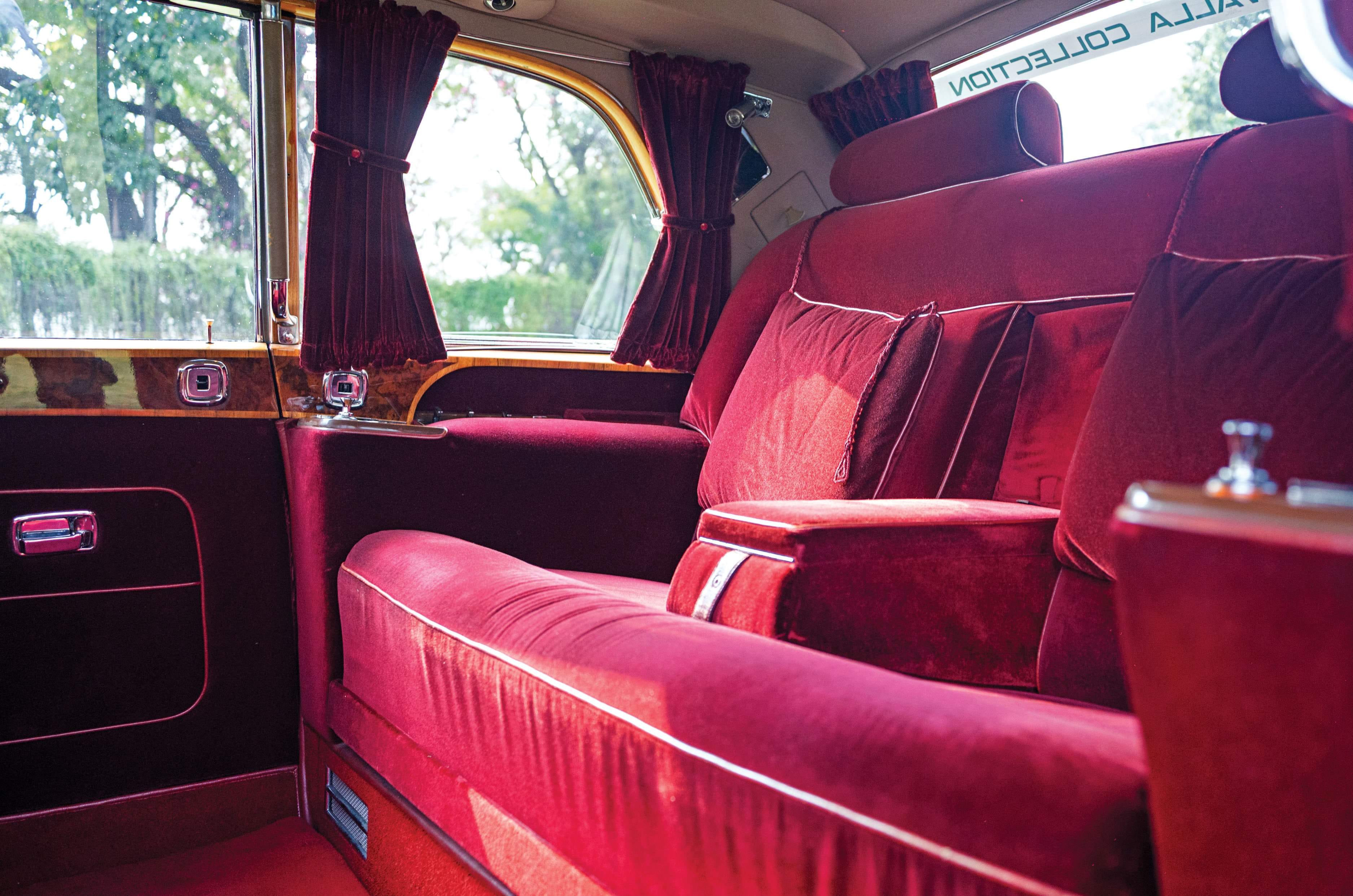
Transitioning to the Phantom VI is like stepping into another world. Where the 17EX is raw and experimental, the VI is polished and ceremonial. The rear is literally as comfortable as Blenheim Palace – the massive sofa, deep pile carpet and the acres of legroom make it incredibly relaxing. And the VI clearly looks the part – imposing, superfluous, gargantuan, but still elegant.
On the move, it’s the refinement that stands out. The thin-rimmed steering wheel feels delicate, the V8 near silent, the gearbox butter-smooth. You ease it into drive with a light movement of the delicate gear selector stalk, and the car glides forward, as if propelled by an invisible hand. The suspension absorbs bumps with nonchalance, the cabin remains flat, and the body of the car only gives a hint of a ‘bob’ when the car drives over large bumps. Even with the windows down, the engine is barely audible, more like an electric motor than a combustion unit. The car’s length makes placing it in tight gaps difficult, but what helps is that the steering is super light, and it changes direction with the effortlessness of a Camry.
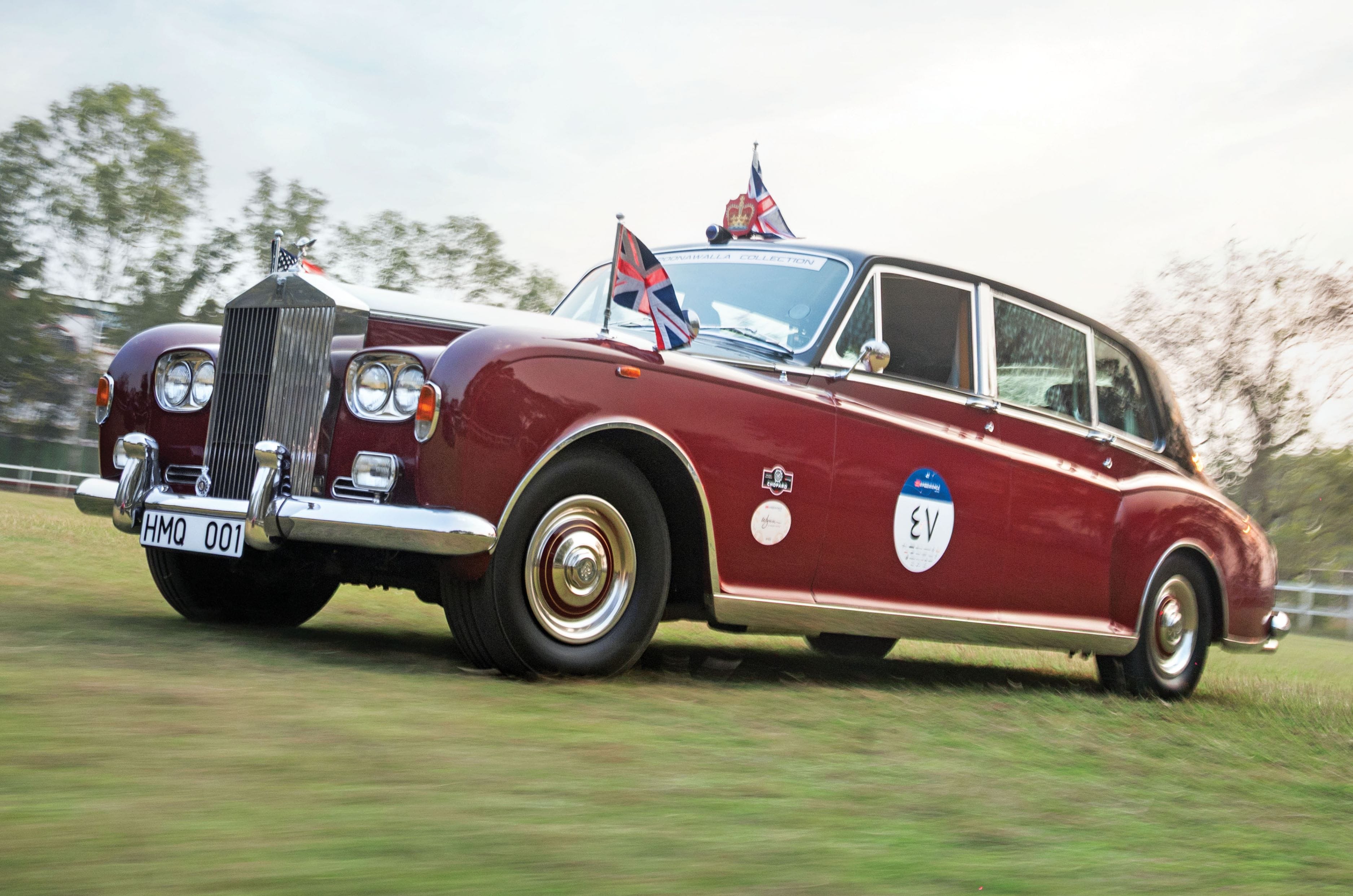
Still, I can’t shake the feeling that on the move, the Phantom VI feels like a luxury liner – steady and composed, cutting through the water effortlessly. It’s the last of the traditional Phantoms, a car that defines luxury in its purest form, a car BMW successfully carried on from when it resurrected the brand.
Together, the 17EX and the Phantom VI show the breadth of Rolls-Royce engineering before the modern era: one experimental and performance-driven, the other ceremonial and comfort-focused. Driving them back-to-back is a rare privilege, a journey from raw innovation to ultimate refinement. That Rolls-Royce’s Phantom represents the pinnacle of motoring was never in doubt. But to be able to do it for 100 years, now that truly is special.
Yohan's Other Rolls-Royces
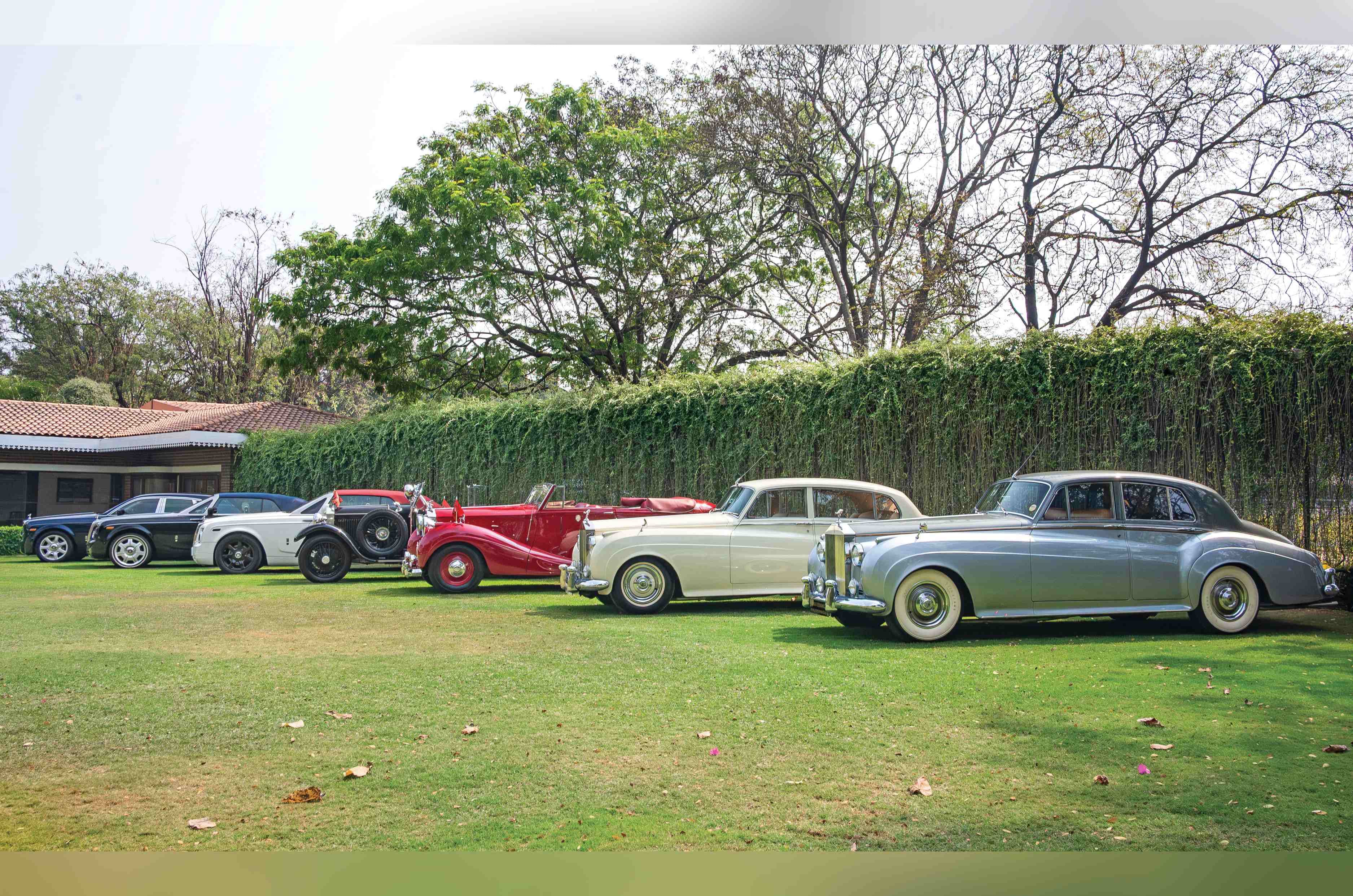
Beyond the Phantoms, Poonawalla’s garage houses other Rolls-Royces that are also on display. Two Silver Cloud IIs – one short wheelbase and one long with partition glass – sit alongside a Silver Wraith once owned by the Maharaja of Mysore, complete with 17 kilograms of solid silver picnic accessories. And there’s a 20HP from the Nawab of Sachin, used for ceremonial and hunting purposes, that further adds royal flavour. There are also Phantom Drophead Coupés, now discontinued and increasingly valuable, and a Phantom VII Sapphire edition, one of only 27 built worldwide.


