
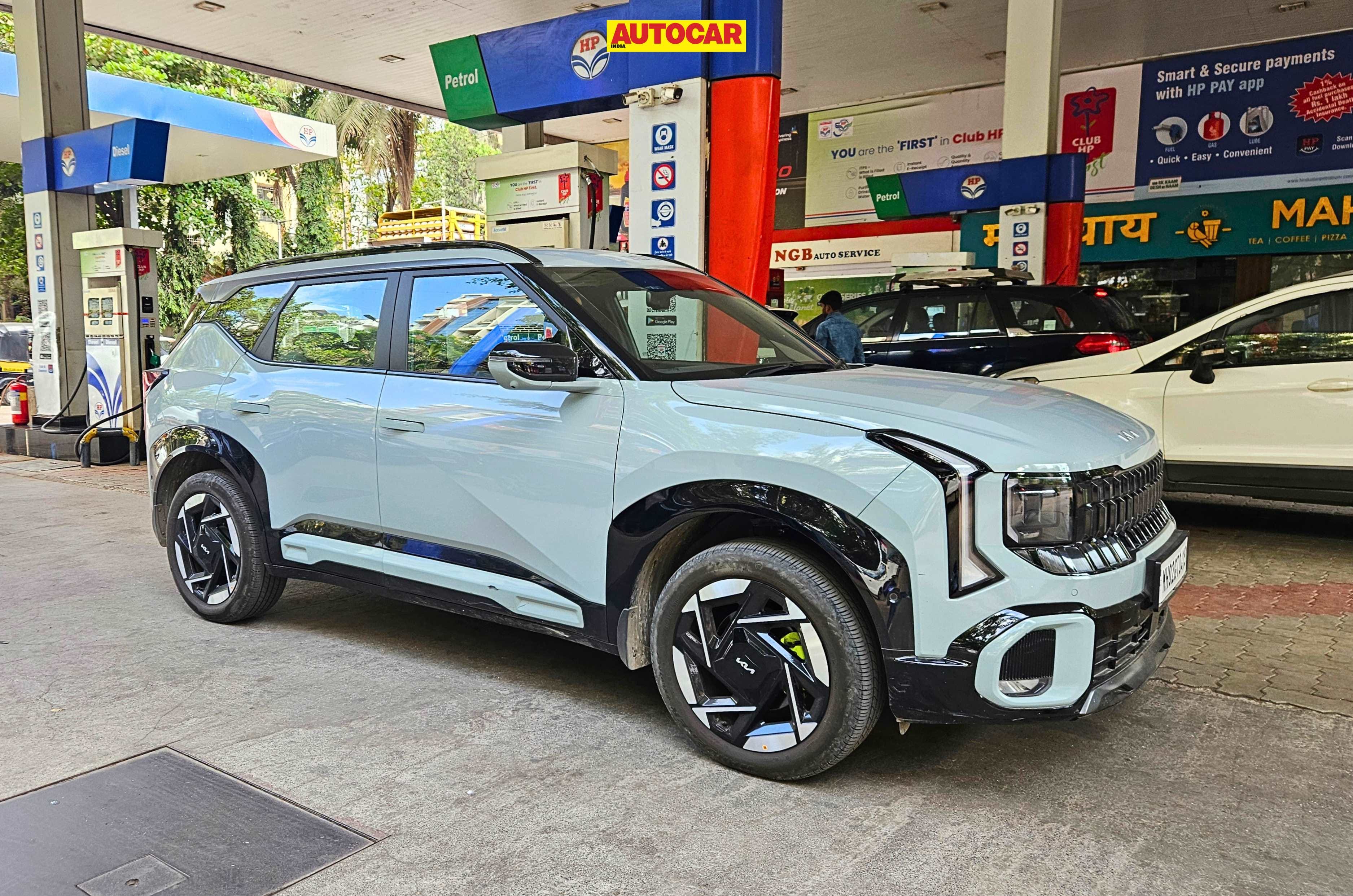
We recently tested the fuel efficiency of the 1.5-litre naturally aspirated petrol-automatic version of the new Kia Seltos. This time, we got our hands on the more powerful 1.5-litre turbo-petrol paired with a 7-speed dual-clutch automatic, and we put it through our real-world efficiency tests.
Misses an auto engine stop-start feature
Gets three drive modes – Eco, Normal and Sport
Kia Seltos 1.5 turbo-petrol real-world efficiency
This version is powered by a 160hp/253Nm, 1.5-litre direct-injection turbo-petrol engine mated to a 7-speed DCT. Driven entirely in Eco mode, it returned 9.27kpl in the city and 14.76kpl on the highway. While the highway figure is respectable for the segment, the city efficiency is on the lower side, likely due to the absence of an automatic engine stop-start function and high ambient temperatures during testing.
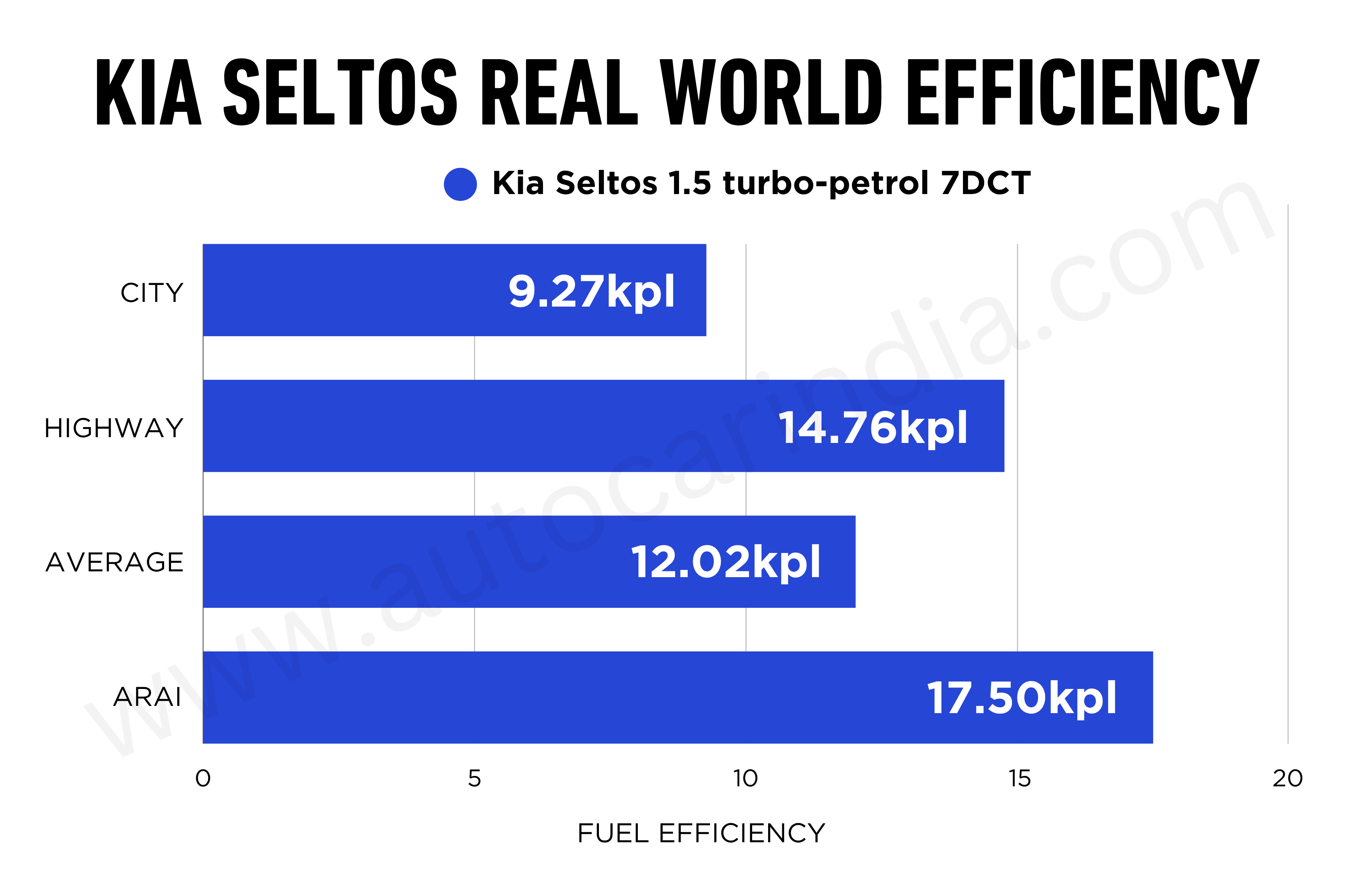
Interestingly, despite its larger footprint and more extensive equipment list, the new model is marginally more efficient than the first-generation 1.4-turbo-7DCT version, which delivered 8.5kpl in the city and 14.1kpl on the highway.
Autocar India’s fuel efficiency testing
Before our real-world fuel efficiency tests, we fill our test cars’ tanks to the brim and maintain tyre pressures based on the manufacturer’s recommendations. These cars are driven in fixed city and highway loops in and around Navi Mumbai, and we maintain certain average speeds. Throughout the tests, there is only one person in each car, and the aircon is set to 22deg C in full-auto mode. We operate other electricals, such as the audio system, indicators and wipers, just like a regular user would. Periodic driver swaps further neutralise variations in driver patterns. At the end of each cycle, we calculate efficiency by refilling the tanks to full.


