
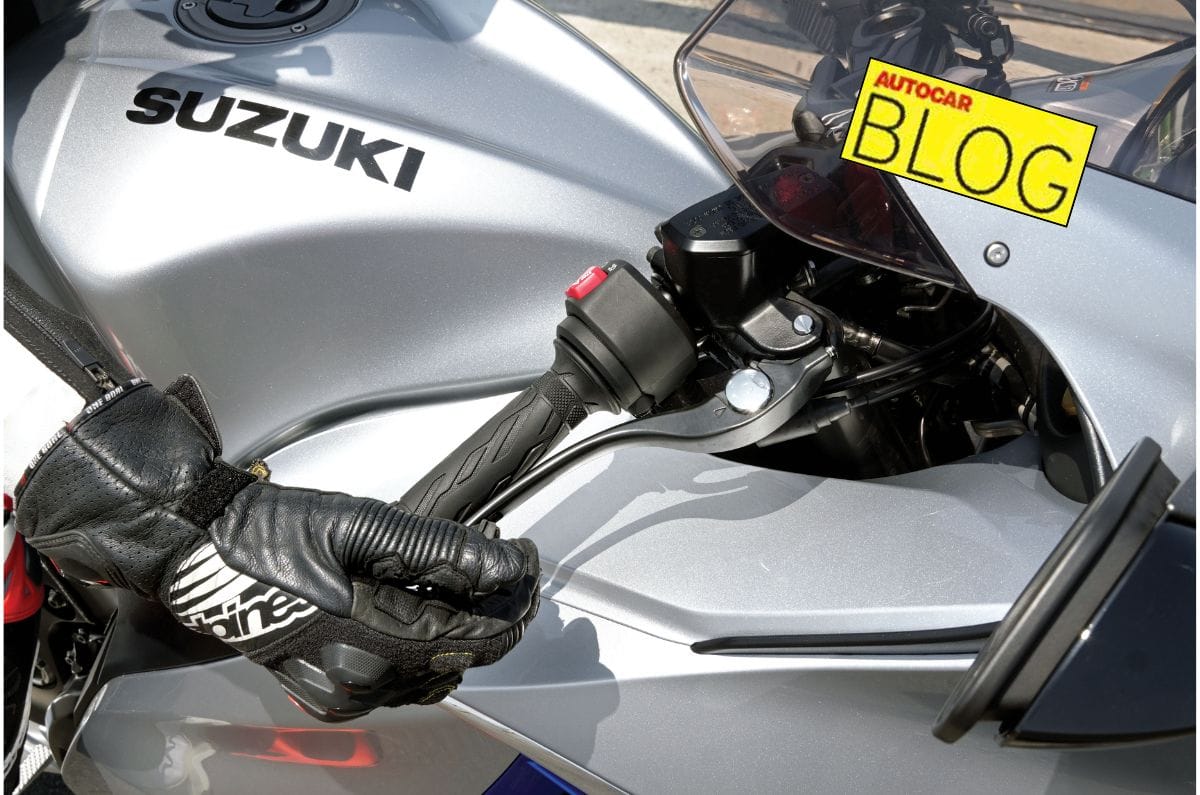
About ten years ago, I got to learn what brake fade on a big bike can feel like. I was on the ferociously fast GSX-S1000 naked and on my fifth or so lap around the Kari Motor Speedway. The layout in those days was different, with a longer main straight that had a strong downhill braking zone into a right hander. On the GSX, the brake point was at about 240kph, and I arrived at this having (unwisely) ignored a slightly softer-than-normal feel in the brake lever the lap before. This time, the lever went almost completely lifeless, and the bike just wouldn’t slow down. With life flashing before my eyes, I hammered down all six gears, stepped on the rear brake, kept pumping the front lever and held on. The bike slithered left and right, ran off the track and onto the runoff, before thankfully coming to a halt just a few feet before the tyre wall.
Fast forward to last month, and I was at MRF’s world-class new testing facility in Trichy, trying out their new tyres on a Suzuki Hayabusa. Flying down at 260-270kph, I slammed on the brakes and was greeted by that sickeningly soft brake lever all over again. This time, I had the twin luxuries of past experience and plenty of room to safely bring the bike to a halt, and soon after I did so, the brake lever went completely limp, with no resistance whatsoever.
Clearly, I’d boiled the brakes again, and this was on just the second high-speed run, with the first run being a slightly slower pull to 240kph as I got a scope of the test track. The very first blame that comes to mind is the ridiculous rubber brake hoses that Japanese manufacturers inexplicably continue to install in a number of powerful motorcycles. It’s not just Suzuki to blame here – other culprits include the Kawasaki ZX-6R, ZX-10R and even the base Honda Fireblade, as well as most big-capacity Japanese street nakeds and ADVs.
My friend and motorcycle technical guru Zain Andrabi, who runs the excellent Zenngine garage in Mumbai, explains that it’s not just the rubber hoses that are to blame. Yes, they do expand under high heat, which causes that weak/dead feel in the lever. However, the OE brake pads also overheat under extreme conditions, which literally boils brake fluid, thereby leading to the situation I faced. His suggestion is to change the brake pads and hoses, as well as switch to a more heat-resistant brake fluid if you plan to ride these bikes to their full potential.
Now, to be absolutely clear, this is highly unlikely to be a problem on the road, because repeated hard braking from high speeds just isn’t a thing for road riding. But the bottom line is that if all these manufacturers are willing to sell you a bike that can repeatedly blast up to mad speeds, then they should ensure that it can repeatedly slow down just as hard as well.
Case in point, a few months ago I was on a Ducati Panigale V4 S at a BIC track day that was slammed on its brakes from about 320kph at the end of the back straight all the way down to about 70kph for Turn 4. The bike continued to endure this lap after lap, for seven sessions in a day and two days in a row. It just kept doing it again and again – as it should.


