
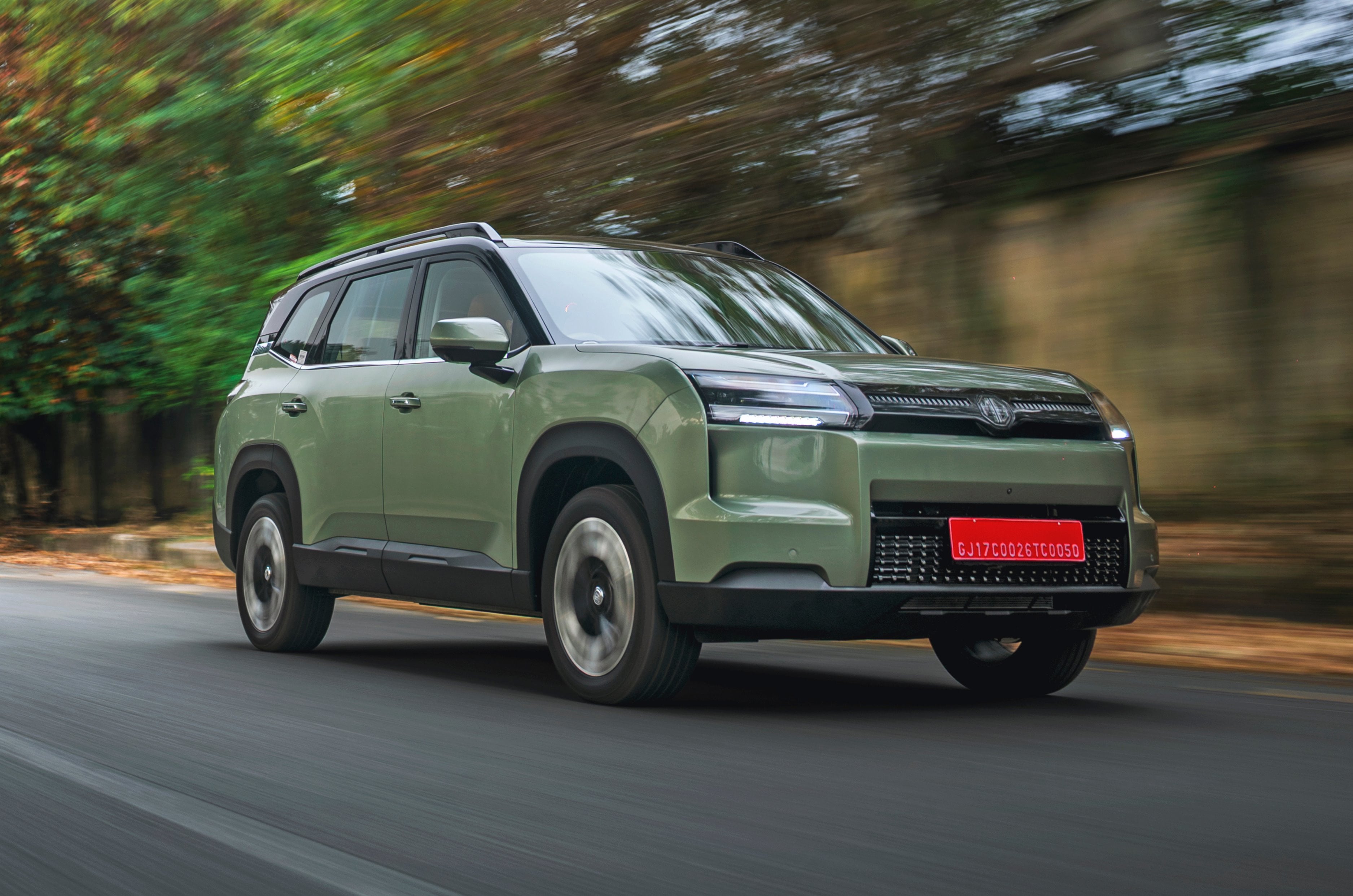
MG’s newest SUV has been christened the Hector Tomahawk, but despite the name, it shares nothing with the ICE-powered Hector we’ve known since 2019. The Hector Tomahawk EV and PHEV are the first models on MG’s ADAPT architecture, which will eventually spawn strong hybrids and range-extender hybrids. We drove the Tomahawk EV in sunny Kochi to see how it stacks up in the ever-growing segment.
MG Hector Tomahawk EV Exterior Design and Engineering -
Let’s talk dimensions first. At 4,745mm long, 1,850mm wide, 1,770mm tall and with a 2,810mm wheelbase, the Tomahawk is larger than the Mahindra XEV 9S in all areas except width. Ground clearance, at 230mm (measured to battery), is also class-best. However, these numbers don’t translate to a particularly imposing stance. Instead, it straddles the line between an MPV and SUV.
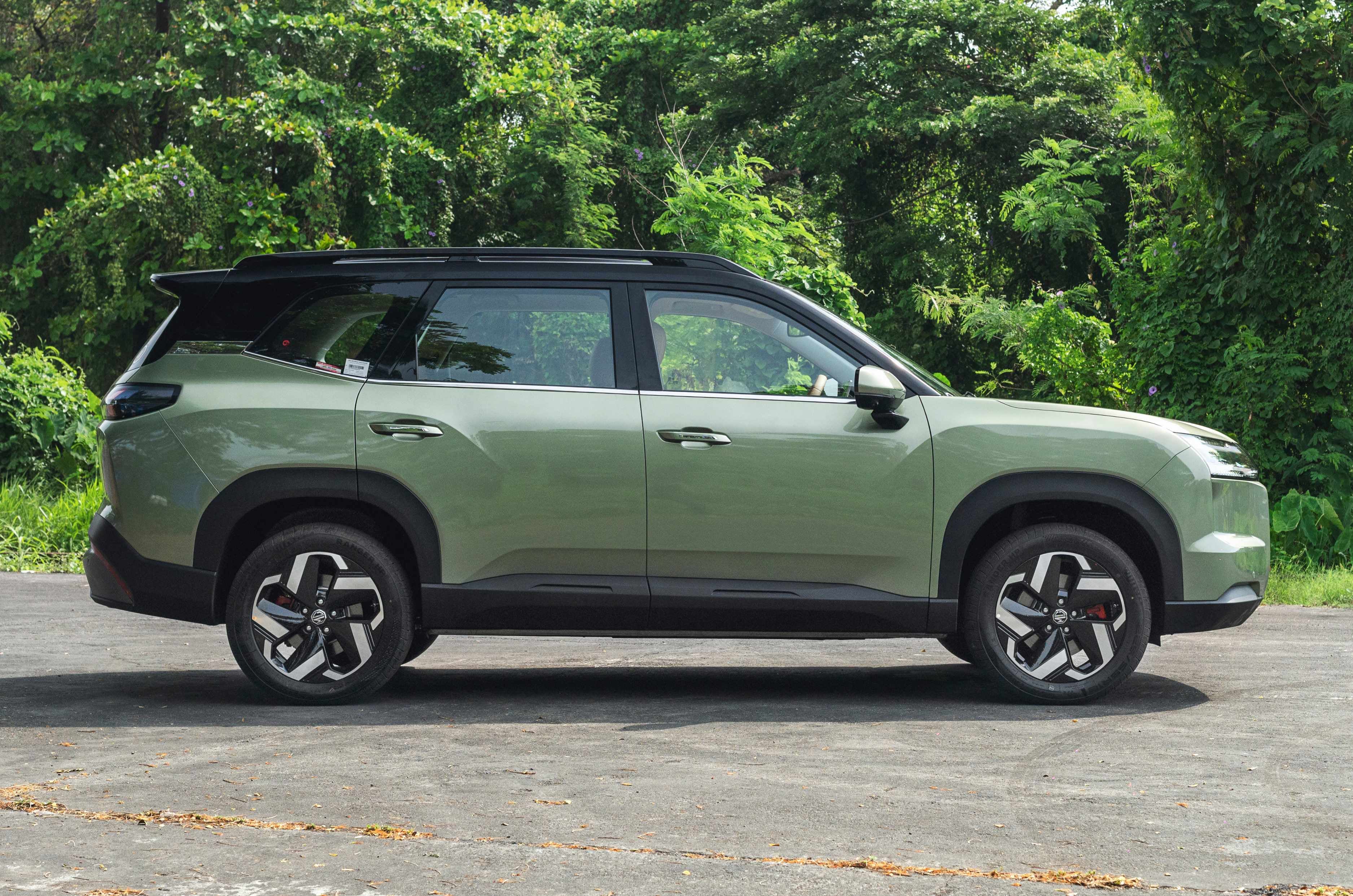
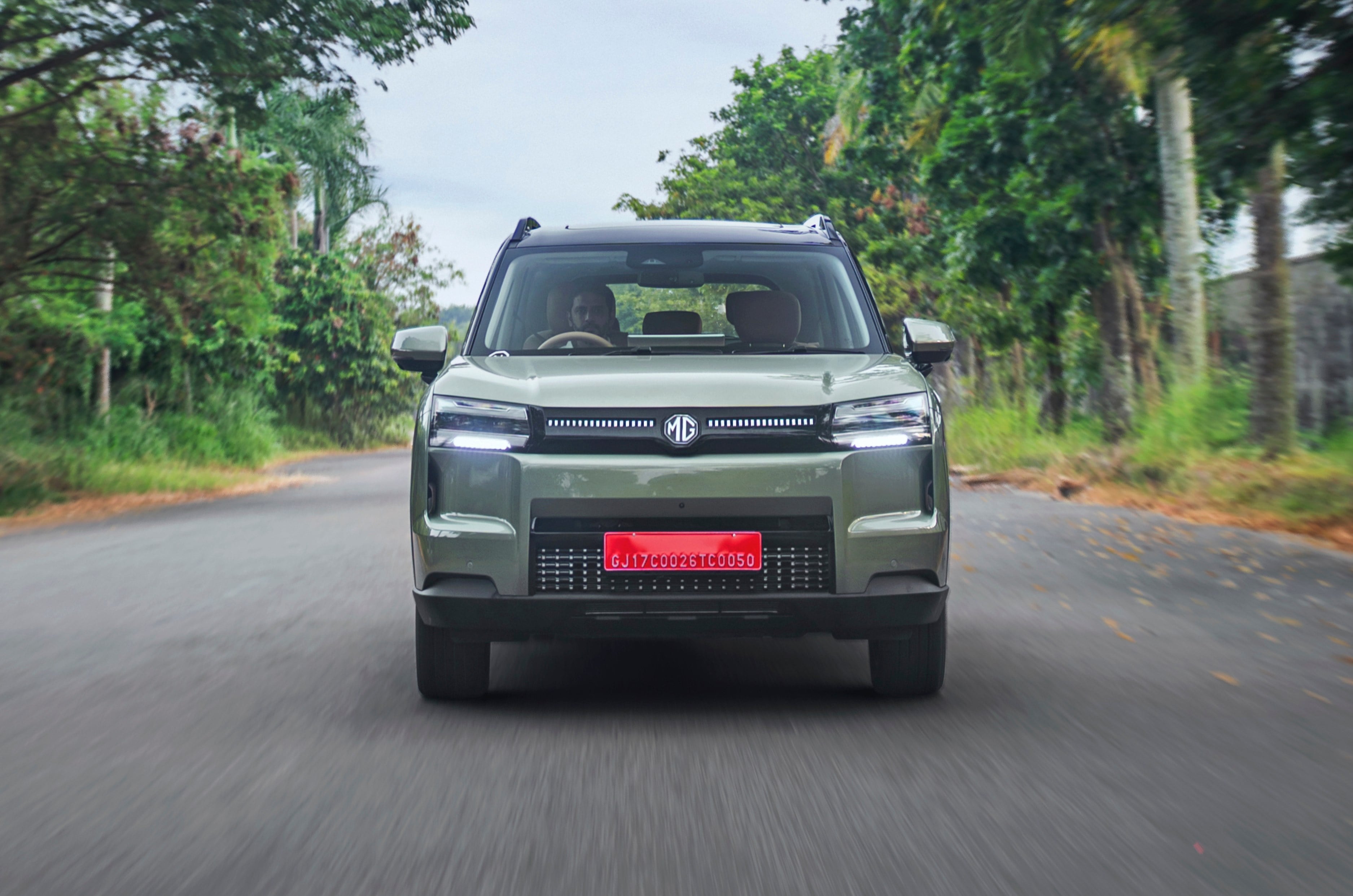
The design is clean and quite handsome, if a bit uninspiring. The front bumper is squared off with pass-through aero vents on the edges and chunky cladding lower down. Cooling requirements are met by slim slots in the centre section with some chrome detailing, while the conventional grille is blanked off and finished in gloss black. No light bar here, thankfully, but the MG logo does glow and is flanked by rectangular LED headlights with a subtle H-shaped light signature.
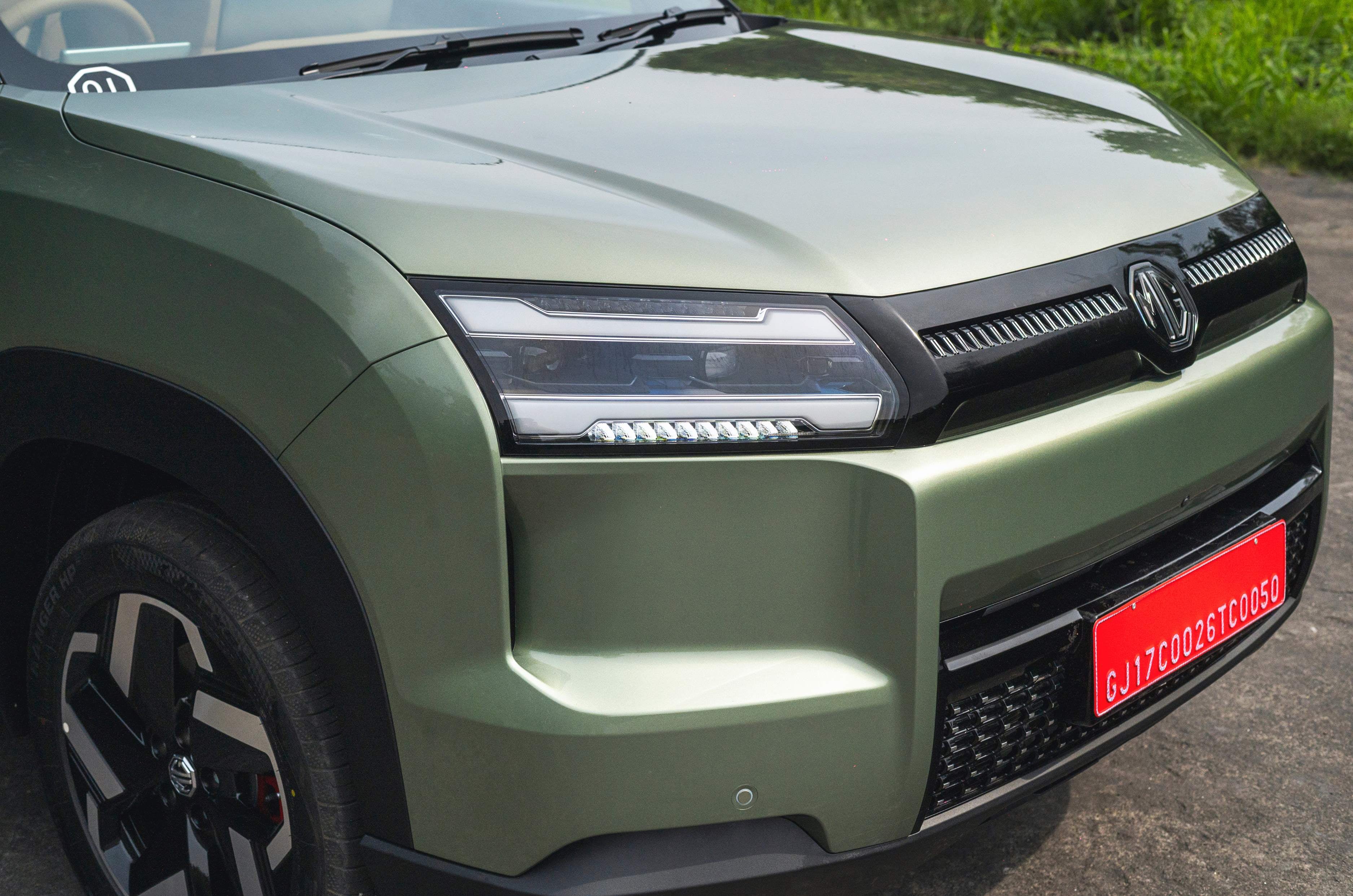
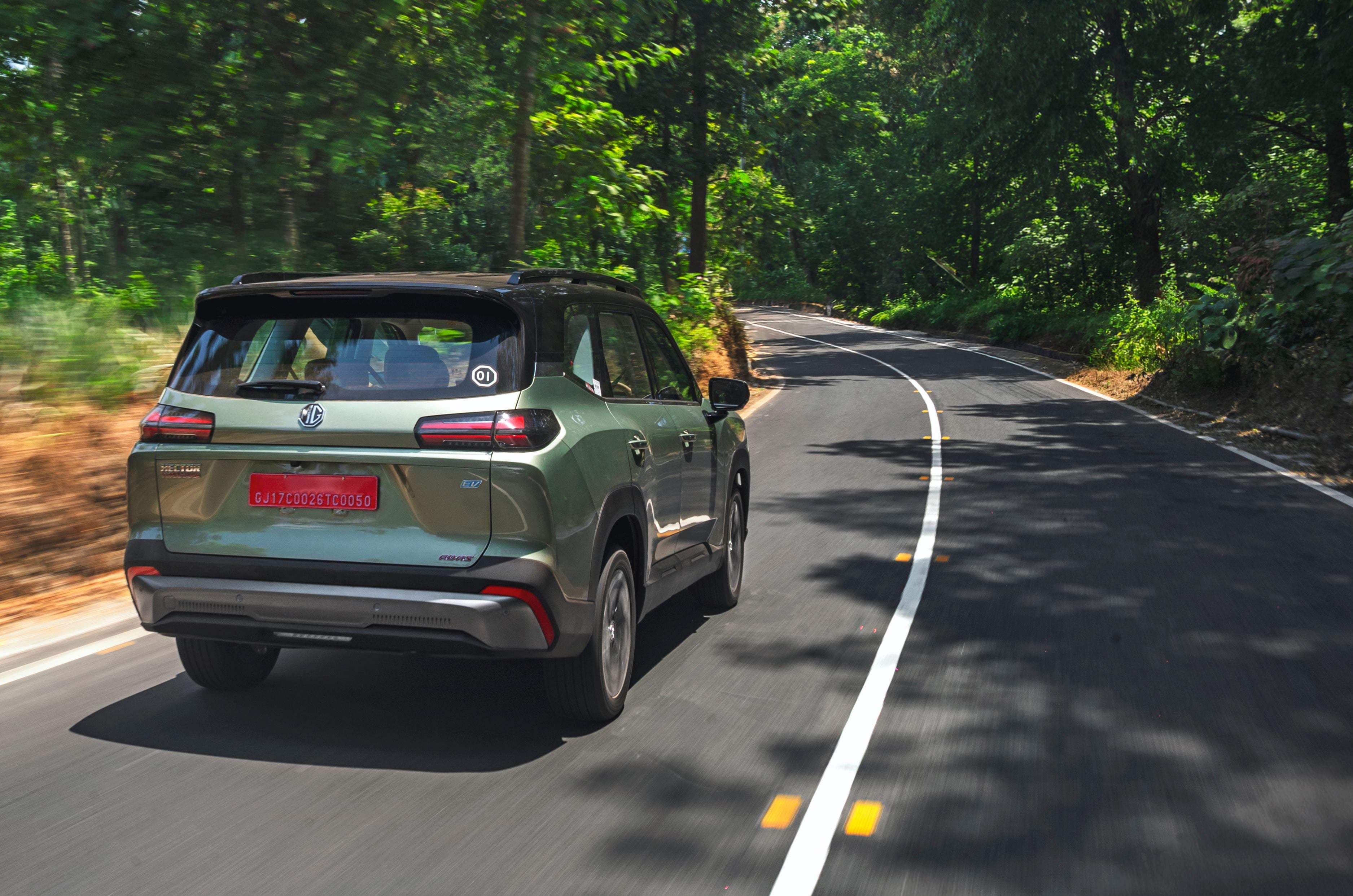
In profile, it looks quite slab-sided, with sharp creases along the fenders and plastic wheel-arch cladding adding some definition. These, along with the chunky door cladding, attempt to give it a rugged appearance but are let down by 18-inch wheels that look a tad too small. No electric door handles here, just good old-fashioned pull types.
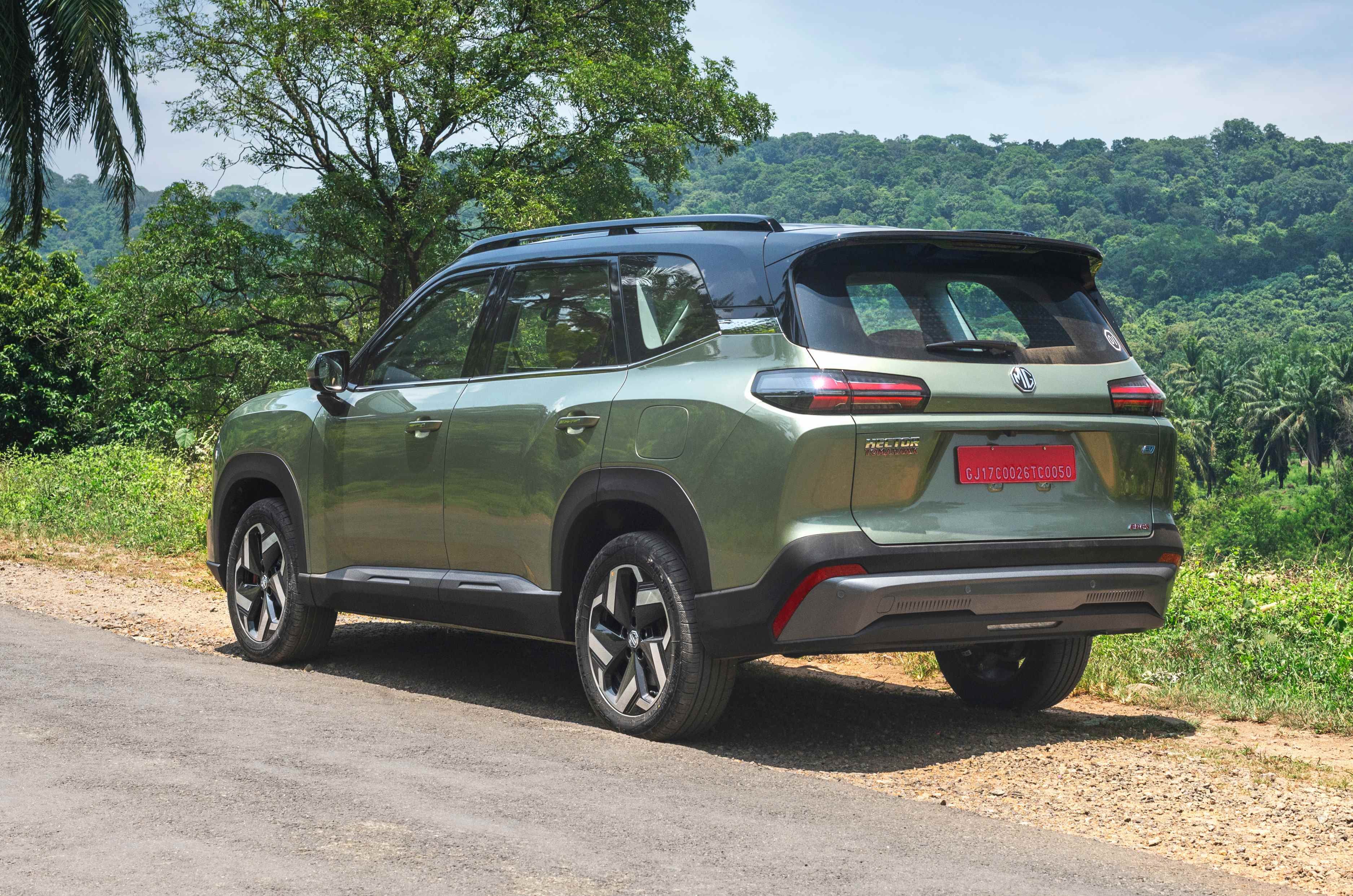
Further back are a set of intricate LED tail-lights that again resist the connected trend. MG’s love for badging is clear though, with four on the powered tailgate. Finishing things off nicely is a sculpted bumper with a grey trim piece and a centre-mounted reverse lamp. Overall, it’s a reasonably pleasing design, but it looks a tad dated and lacks the butch appeal of some rivals.
MG Hector Tomahawk EV Interior Space and Comfort -
Inside, the dash features a familiar minimalistic layout with a large touchscreen front and centre. It looks premium and features soft-touch materials on the dash and doors, but lacks a certain wow factor, and the light tan colour palette might not be to all tastes. That said, the light tone and large windows do give it an airy ambience. Look hard, and you will find areas where fit and finish could be improved. The centre console in particular feels poorly textured and finished, which we were told is down to a supplier issue. Speaking of the centre console, the column-mounted drive selector frees up space here for a wireless charger, cupholders, multiple bins as well as a large pass-through cubby lower down, and the door bins are enormous too.
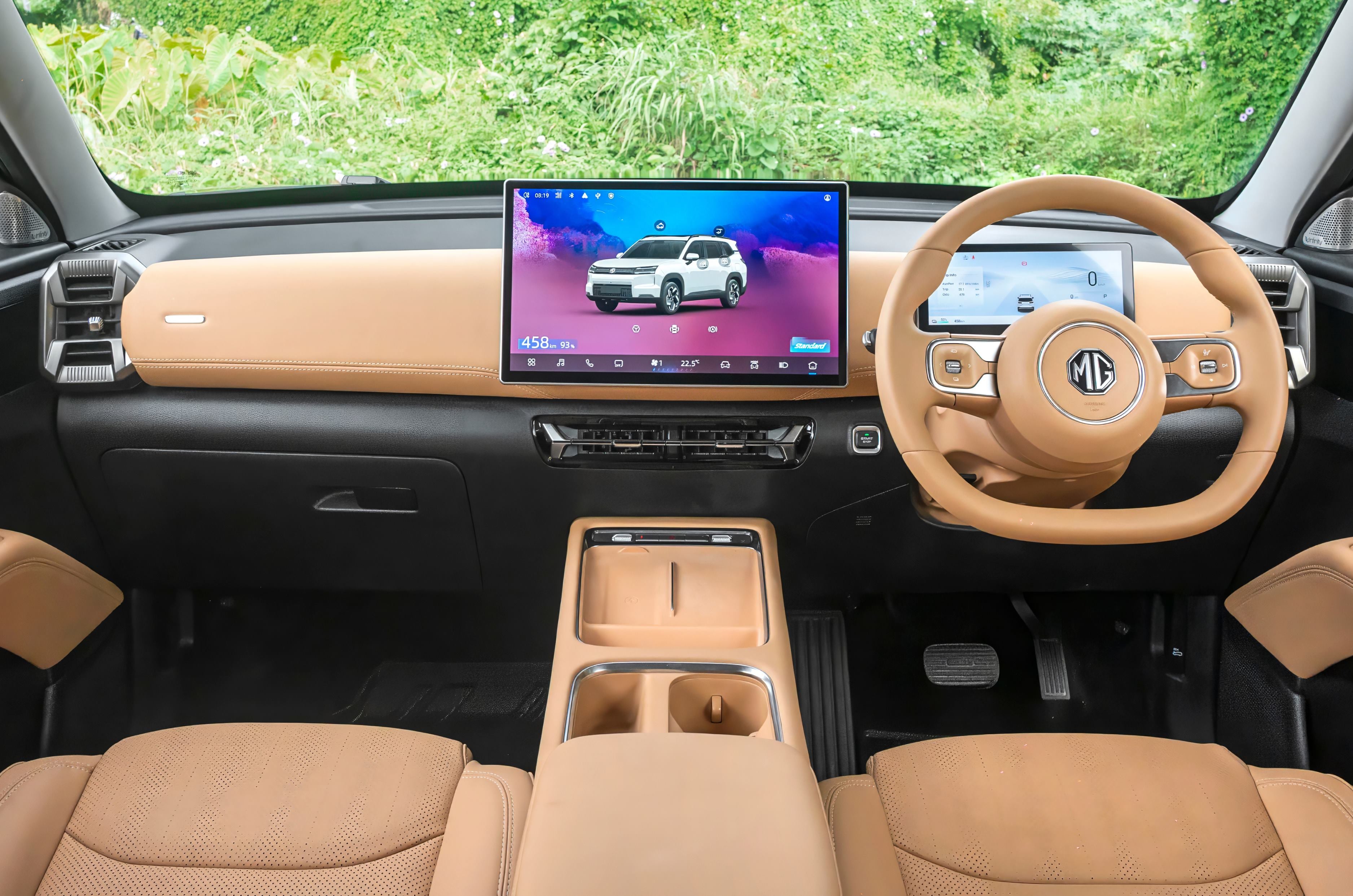
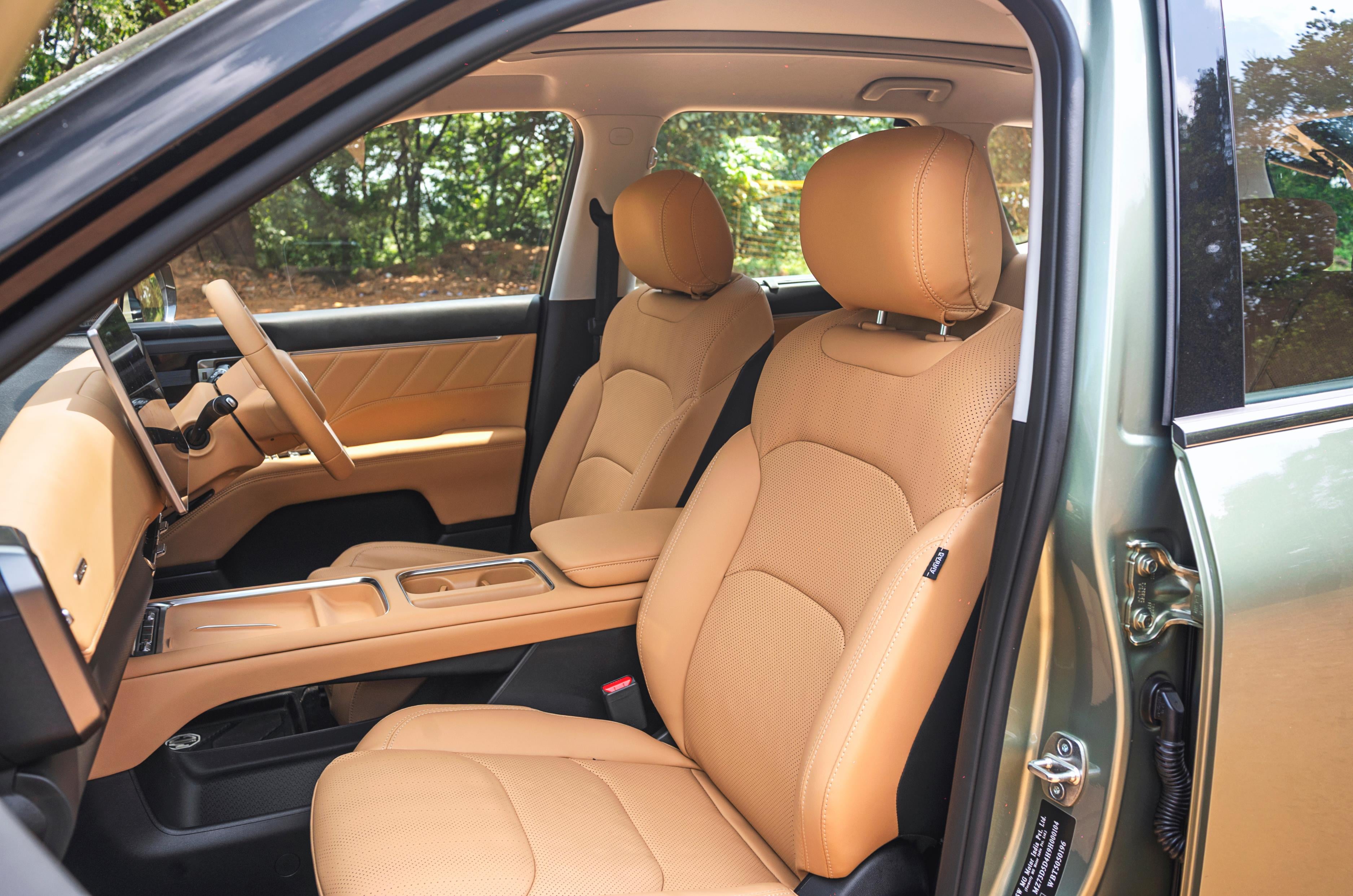
It’s easy to get into a comfortable and commanding driving position using the power-operated seats and reach-and-rake adjustment for the steering wheel. The seats themselves are wide, and despite the firm cushioning, they felt comfortable on our full day of driving. They are ventilated too, and the driver’s seat also gets a memory function.
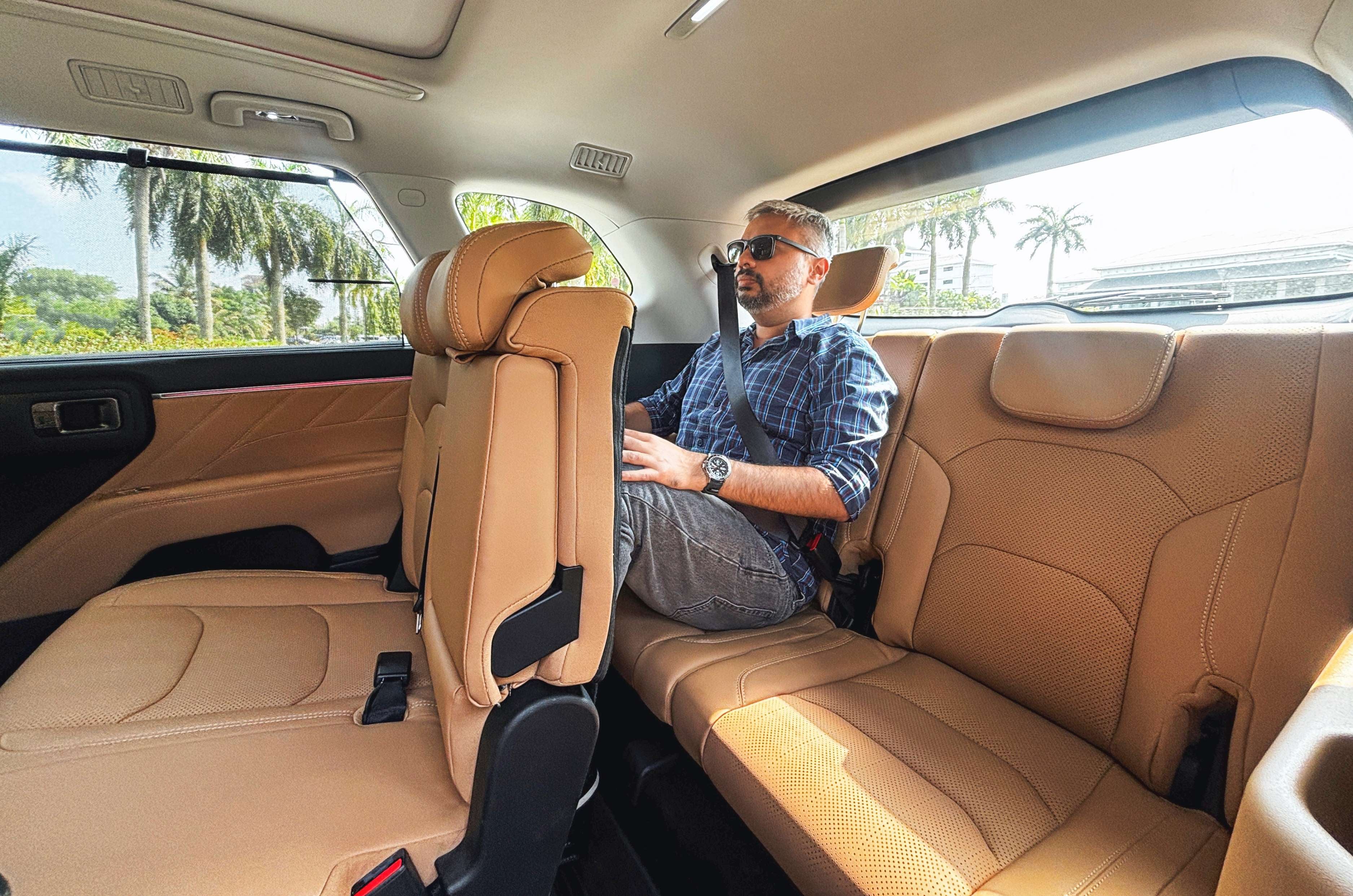
The Tomahawk has the second-longest wheelbase in class (next only to the Vinfast MPV 7), and it shows in the second row. Legroom is excellent, and while you do sit slightly knees-up, thigh support is adequate too. The seatback reclines pretty far back and features an armrest and three adjustable headrests. Window sunshades, AC vents and Type-C USB ports add to the rear-seat comfort and convenience.

The Tomahawk EV is available in both 5- and 7-seater guises. The latter adds a sliding second row with one-touch tumble to access the third row, as well as more AC vents on the roof and a dedicated fan-speed control. Getting into the last row is surprisingly dignified thanks to a large aperture, but kneeroom depends largely on the middle-row passengers’ generosity, and the low seat means thigh support is non-existent. Headroom is good, though, and for short journeys, adults will be fine back there.
With the third row up, boot space stands at 192 litres – enough for a couple of carry-on bags – expanding to a generous 528 litres with it stowed. Under the boot floor are a few more storage cubbies, which are handy since there is no frunk – a miss considering there appears to be enough space under the bonnet. A space-saver spare is mounted underneath the car.
MG Hector Tomahawk EV Features and Safety -
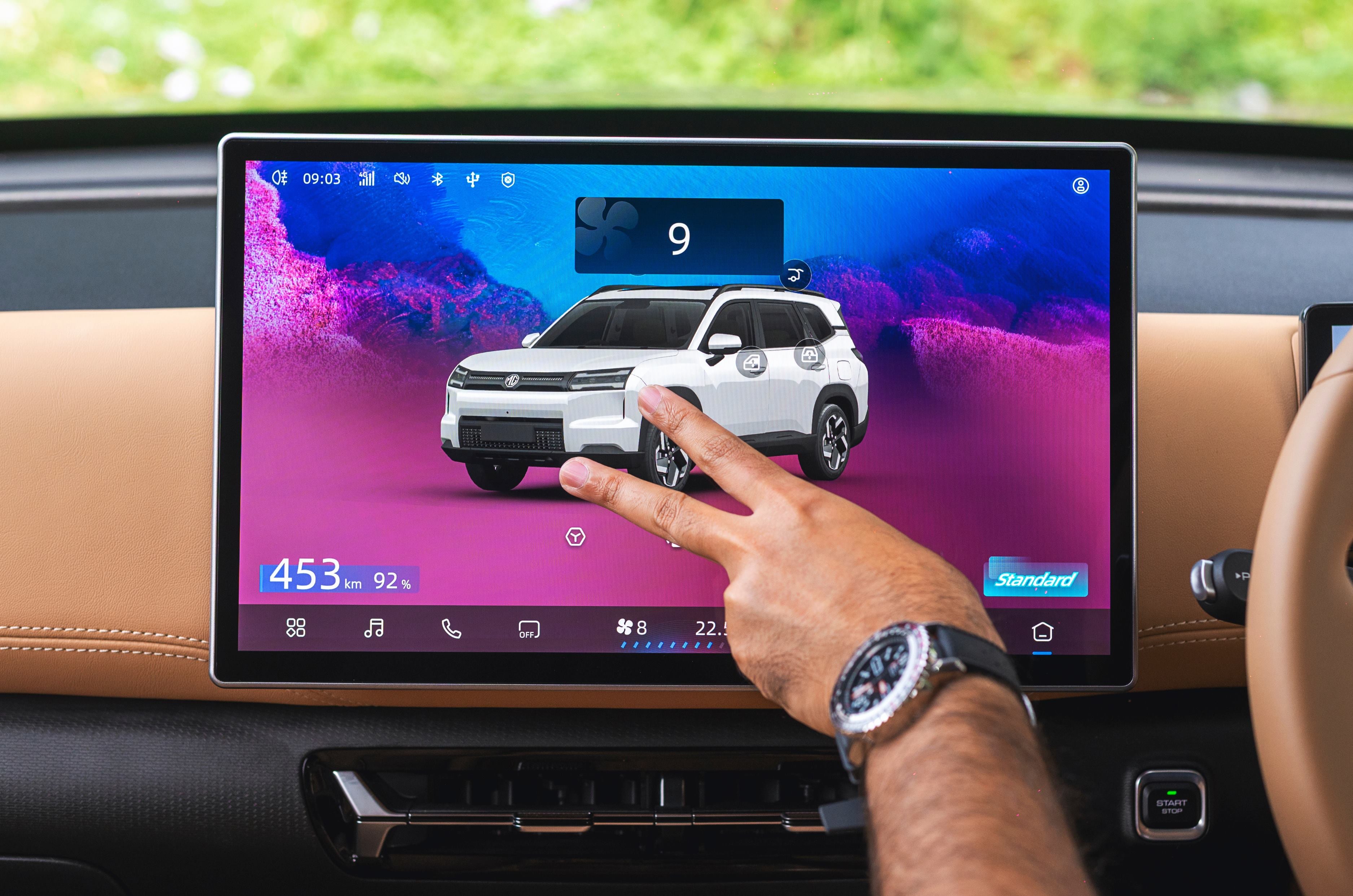
The minimalist interior layout means you reach for the 15.6-inch infotainment screen for most functions. While this can get distracting, physical and swipe-gesture controls together handle most basic HVAC and audio functions with surprising ease. Anything beyond basic, though, will require a deep dive into the screen. While the screen is sharp and snappy and the UI is clean, it can take a while to find your way through the maze of sub-menus. Wireless Android Auto and Apple CarPlay are also present, but using either hides the row of shortcuts at the bottom of the screen. Hardcoding these buttons to always stay on top would improve usability. The screen also often catches glare, which takes away from the otherwise sharp 360-degree camera.
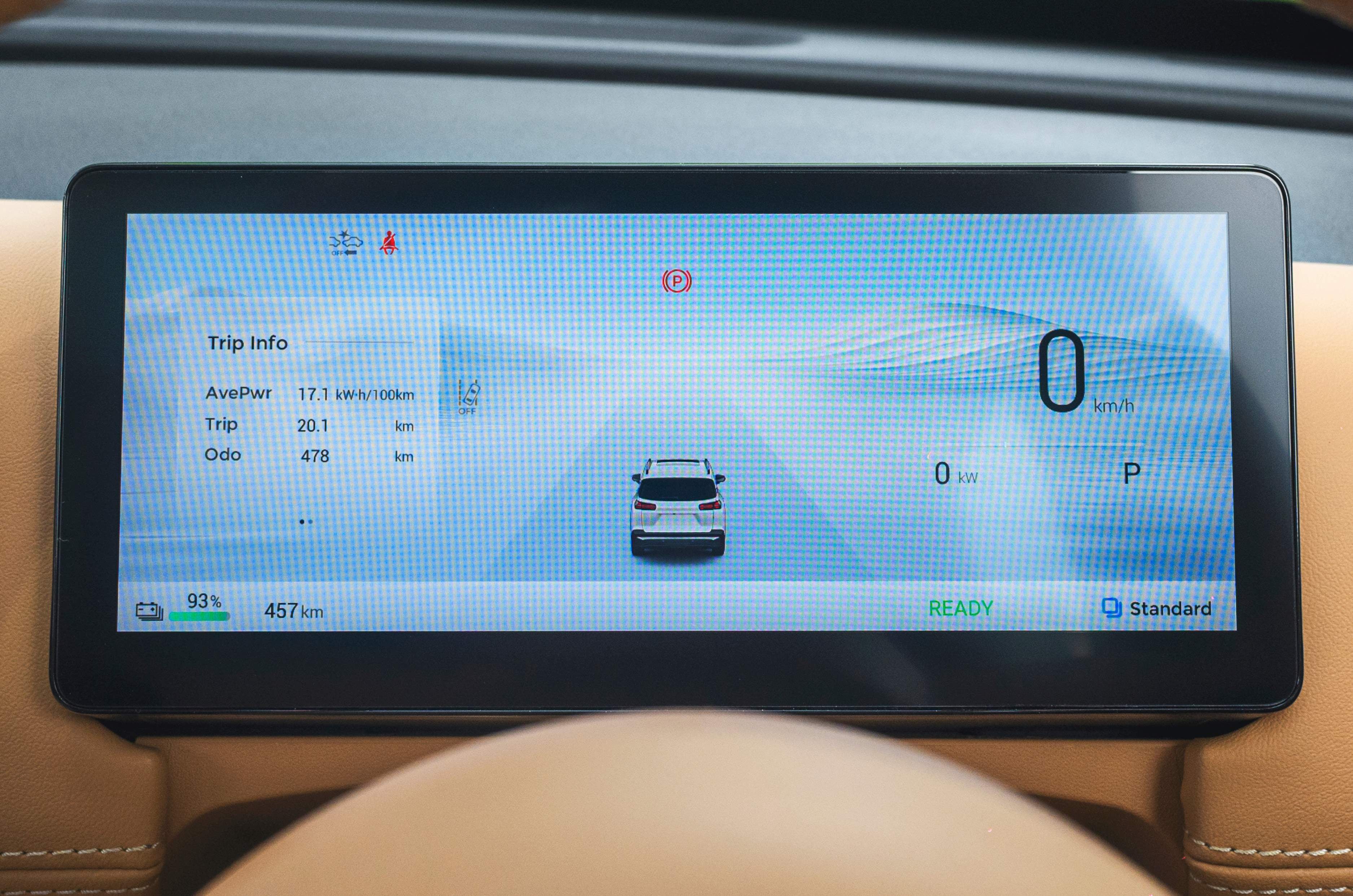
Instrumentation is handled by an 8.8-inch display directly in front of the driver. The screen itself is sharp, but some smaller fonts might have you reaching for your reading glasses. Its real estate could also be better utilised by displaying the blind-view camera feed rather than the current pop-up on the centre screen. Other feature highlights include a sweet-sounding 10-speaker Infinity audio system, a panoramic sunroof that stretches over the second row, 256-colour ambient lighting, connected car tech, an AI assistant and more. It’s worth mentioning that the Tomahawk EV also gets a physical start/stop button, which is absent on the brand’s other EVs.
A Level 2 ADAS suite is also available on the top Essence trim, with functions such as adaptive cruise control, lane keep assist and auto emergency braking. While there isn’t an official crash-test rating yet, the robust standard safety kit, including six airbags, ESP, all-wheel disc brakes and Isofix mounts, provides some confidence.
MG Hector Tomahawk EV Performance and Refinement -
The Tomahawk EV offers just one powertrain configuration – a 69.2kWh LFP battery pack powering a single motor on the front axle, producing 204hp and 310Nm, good for a claimed 0-100kph time of 8.2 seconds. Its front-wheel-drive layout puts it at a disadvantage against rivals from Tata and Mahindra, who offer either rear- or all-wheel drive and higher power outputs. The front-driven Hyundai Creta Electric or Kia Carens Clavis EV are closer matches, and the Tomahawk EV betters them on power and torque.
Initial throttle response is mild, making it quite easy to amble around town, but push harder, and you get a power spike resulting in torque steer. In Sport mode, you’ll hear the front tyres protest when made to put all that torque down on a less-than-perfect road. Standard mode dulls response slightly, but it can still catch new drivers off guard. With time, it is possible to drive around this, but the latest crop of rival EVs has mastered a more linear delivery. Eco mode feels a bit tepid and is best saved to counter range anxiety, while a Custom mode lets you customise power output and regen braking in increments of 10 percent. There are also three preset regen modes – Standard, Comfort and Strong – but no paddles to control them or one-pedal mode. Instead, you get an Intelligent setting that uses the ADAS sensors to adjust regen in real time based on the traffic in front of you.
Refinement is a bit of a mixed bag. While the motor is fairly muted and there is little wind or tyre noise coming through, you hear the suspension at work on rough patches.
MG Hector Tomahawk EV Range and Efficiency -
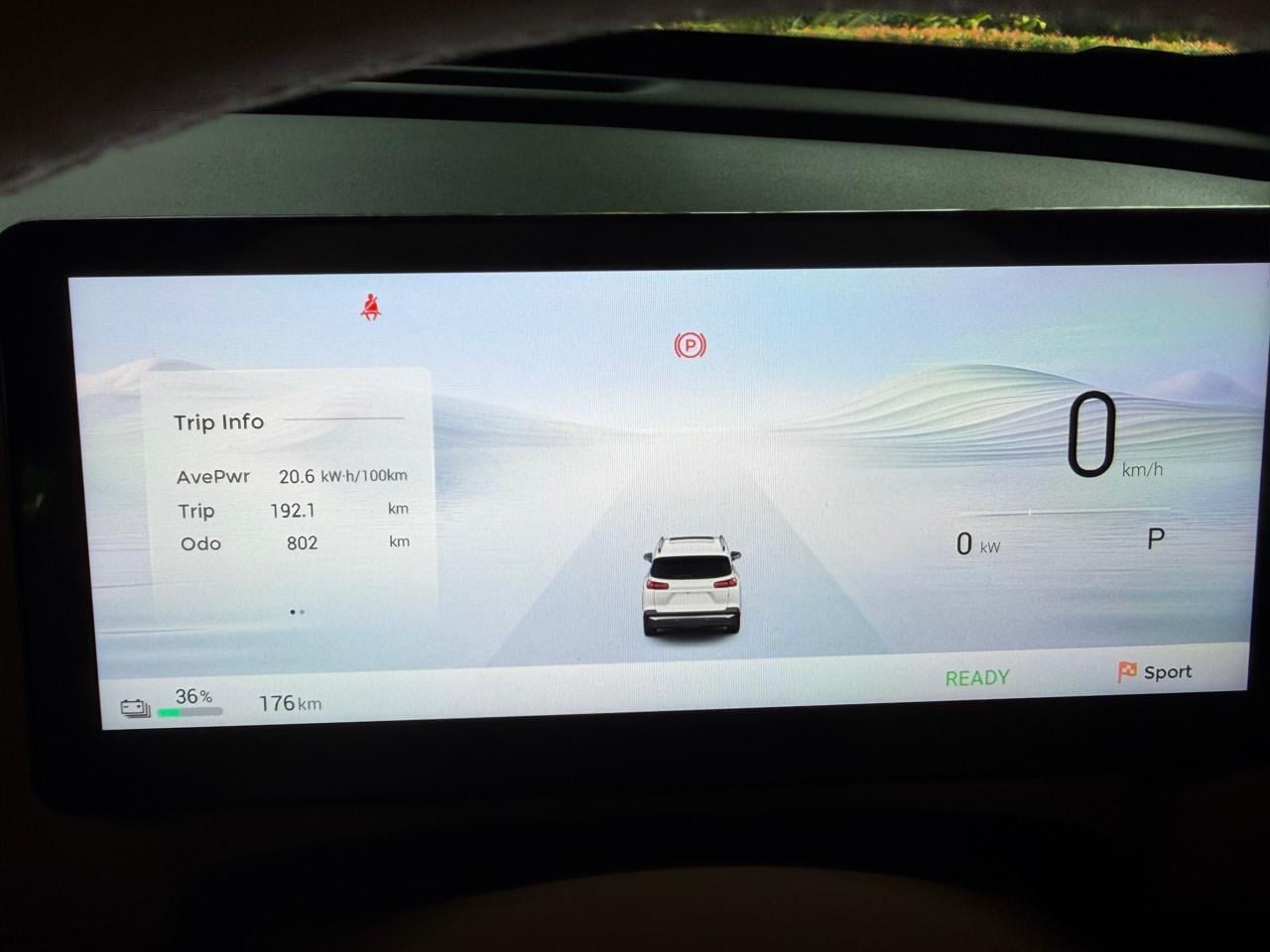
While the Hector name is often associated with poor fuel efficiency, the new EV and PHEV hope to change that. MG claims an MIDC range of 517km from its 69.2kWh battery pack. On a spirited drive from Kochi to Kozhikode covering 192km, we recorded an overall efficiency of 4.85km/kWh, translating to a real-world range of 336km. This was on a fast highway run, where the Tomahawk’s tall shape won’t do its efficiency any favours. We’ll put it through our standard real-world efficiency test when we have the car for longer.
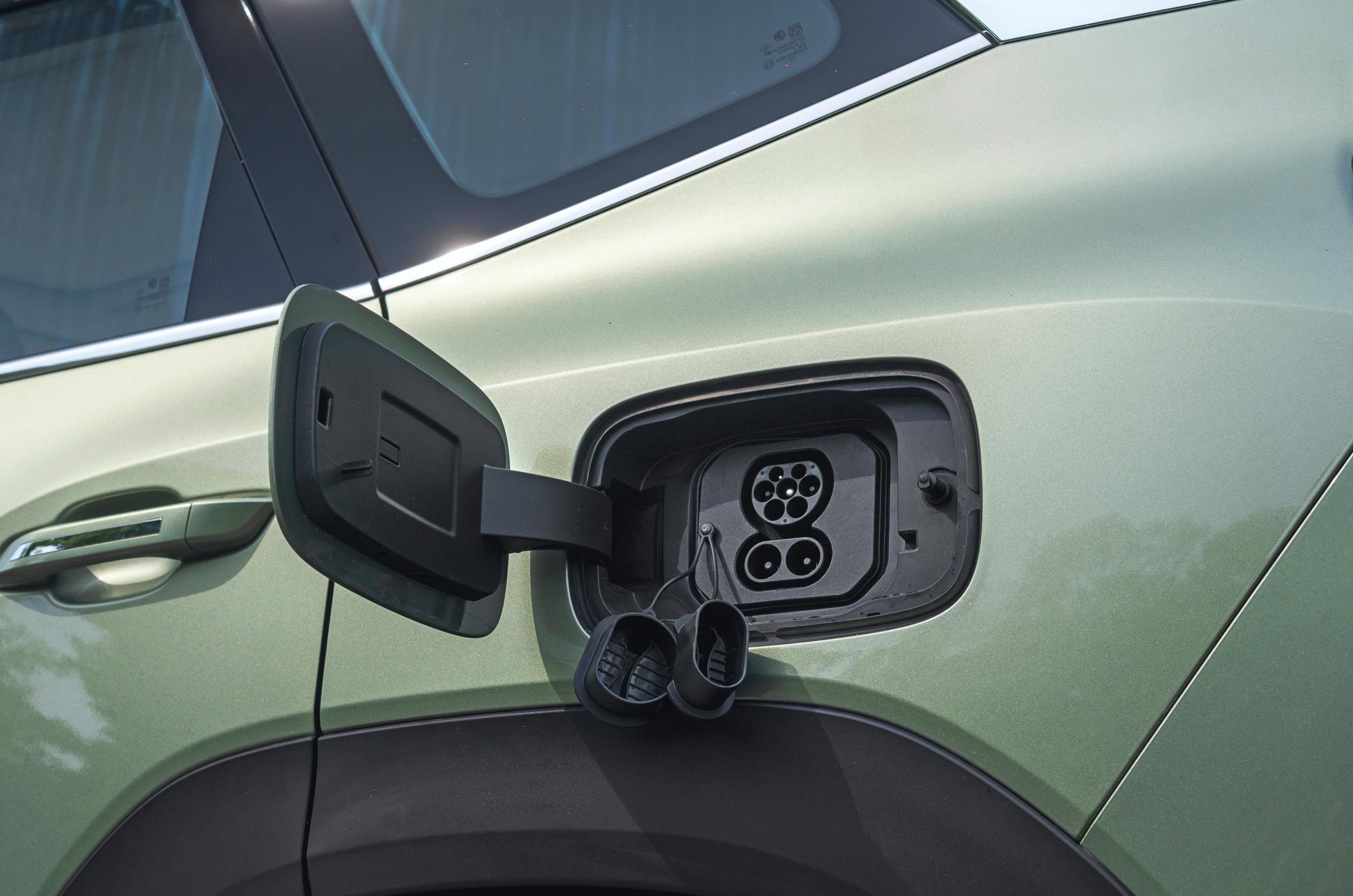
Topping up the battery from 10 to 100 percent using the 7.4kW charger is said to take around 12.5 hours. It can also DC fast charge at speeds of up to 90kW, which is lower than its immediate rivals but still enough to take the battery from 30 to 80 percent in about 35 minutes.
MG Hector Tomahawk EV Ride Comfort and Handling -
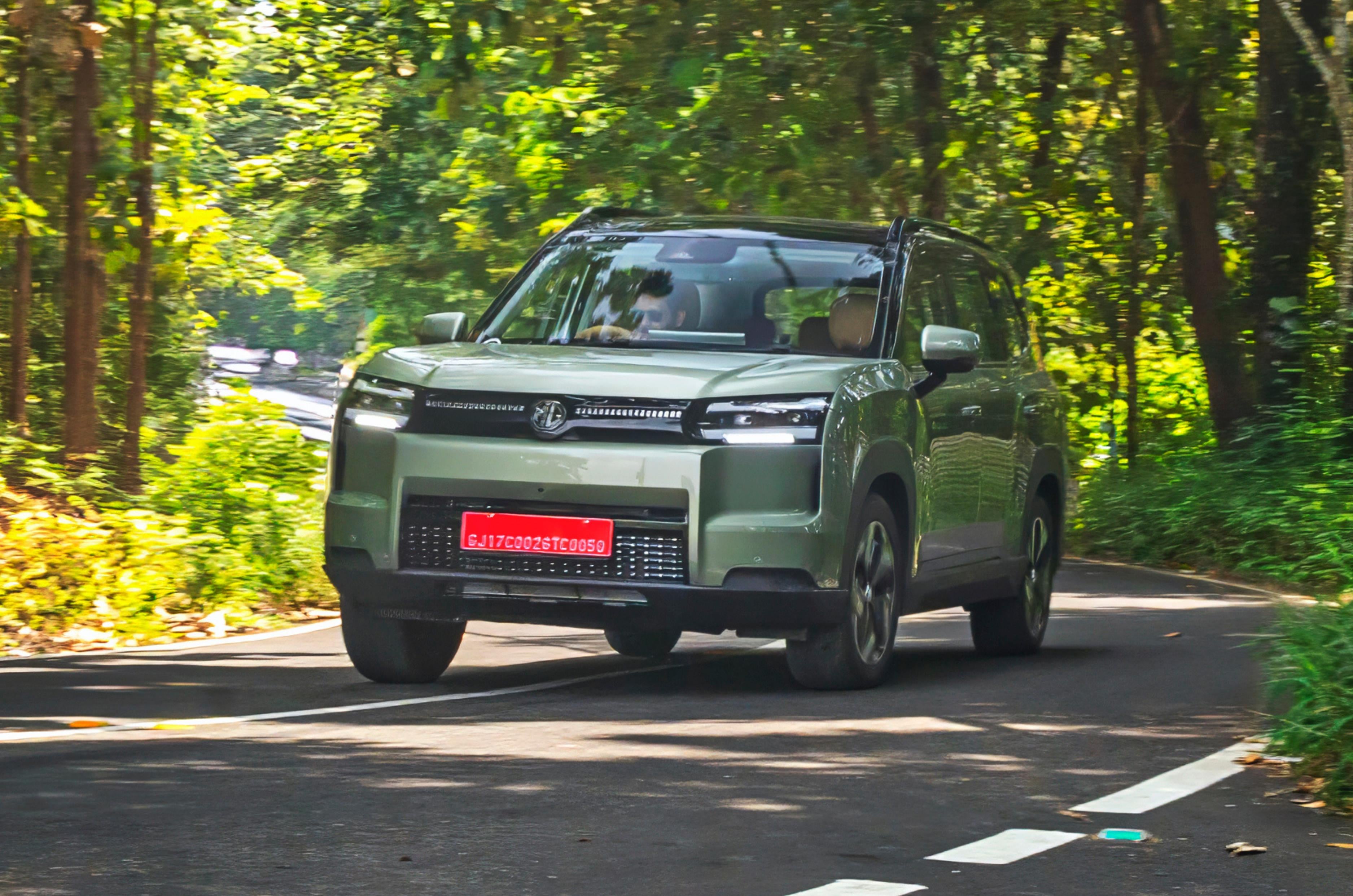
The Hector Tomahawk EV makes a big step up in ride and handling compared to the ICE Hector, but there is still some room for improvement. It rides with more maturity than previous MG EVs, comfortably absorbing most of what we threw at it. However, you do hear the suspension working. Sharper bumps reveal an underlying firmness that occasionally comes through to the cabin. Most roads around Kochi were relatively smooth, and we weren’t able to experience it on rippled concrete, so we will reserve full judgement until we have the car for longer.
A big positive is how easy the Tomahawk is to drive for something this large. Visibility all around is excellent, and you can see the bonnet’s edges from the driver’s seat. A light steering also helps, and overall, it feels less intimidating to drive through tight traffic than, say, the XEV 9S.
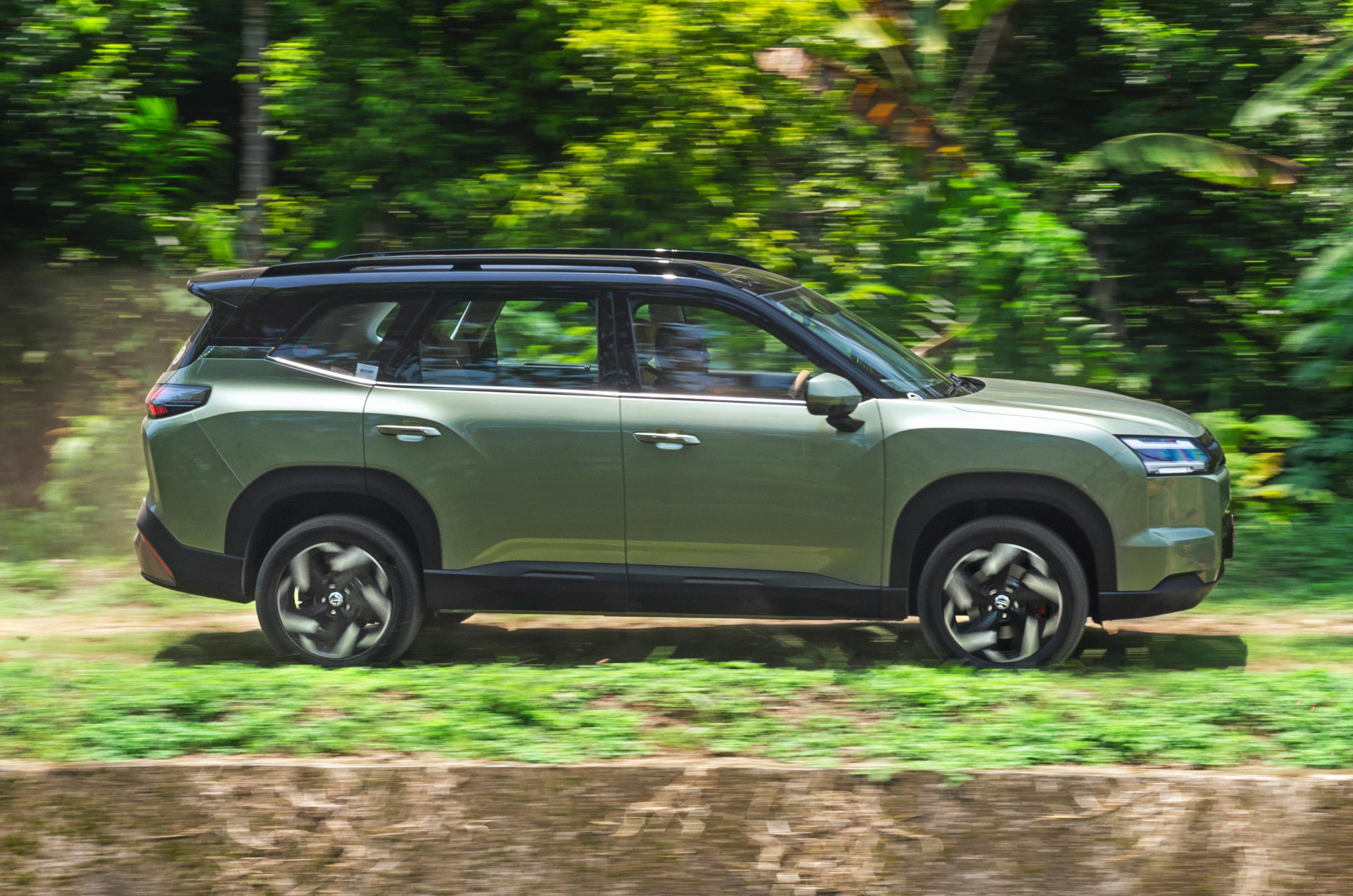
The steering also weighs up as speeds rise and feels reasonably direct, though the sheer amount of torque going to just the front wheels corrupts the feel. At a quick pace through the twisties, you feel the wheel tugging at your hands as you apply power. Body control is good, and it stays composed through quick direction changes, but a sedate pace is more its element. Braking is strong, with four-wheel discs bringing the heavy SUV to a confident halt.
MG Hector Tomahawk EV Value for Money -
Introductory pricing for the Hector Tomahawk EV starts at Rs 19.49 lakh and tops out at Rs 23.49 lakh. The Battery-as-a-Service (BaaS) scheme lowers the entry barrier to Rs 13.99 lakh, with battery rental set at Rs 4.90 per km. While all these prices are applicable to limited units only, this is quite aggressive pricing from MG.
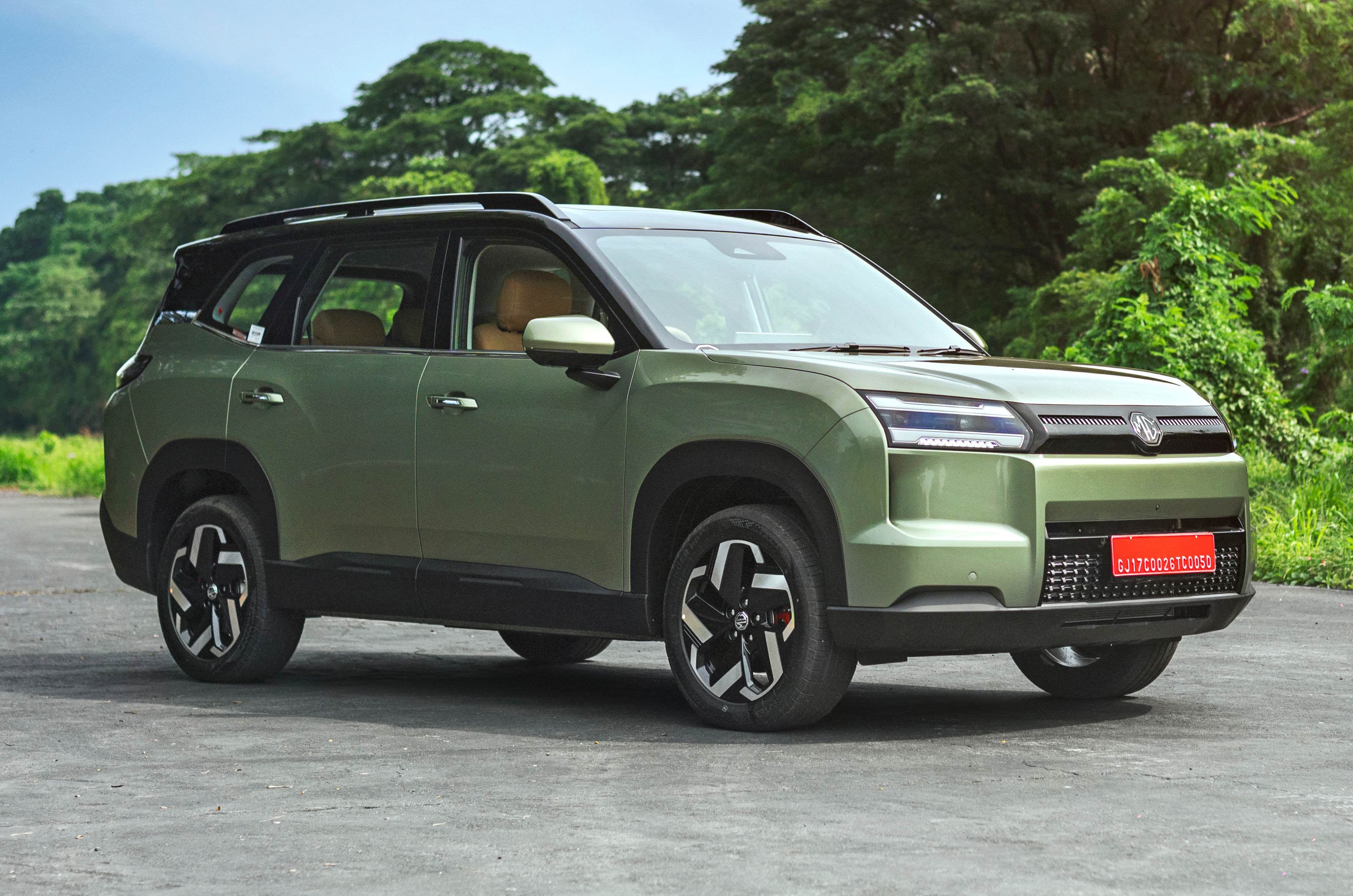
When compared spec-for-spec, it undercuts the competition from Tata and Mahindra while offering a bigger battery and more performance than its Korean rivals. It has a spacious and comfortable cabin, a comprehensive feature set and is surprisingly easy to drive for its size. However, it lacks the dynamic polish of its rivals and therefore doesn’t feel like a latest-generation EV. As such, its Hector name starts to make more sense. It is a practical, comfortable, no-nonsense SUV that will appeal to the chauffeur-driven just like its forebear. Those looking to do the driving, though, are better off looking elsewhere.


